In this guide
- Sunmica is a brand name that turned into the common word for decorative laminate; the product itself is high-pressure laminate (HPL).
- An HPL sheet is layers of resin-soaked kraft paper under a printed decor paper, fused together under heat and high pressure.
- There is no mineral mica in a laminate sheet. The word comes from Formica, a resin material first made as a substitute 'for mica'.
- At the counter, ask for the type (standard, post-forming, liner or compact), the thickness and the finish, not just 'sunmica'.
- Decorative laminates are specified in India under IS 2046, the BIS standard that was revised into eight parts in 2025.
Is sunmica the same as laminate?
Yes. In the laminate vs sunmica question, both words describe the same product: a decorative high-pressure laminate (HPL) sheet glued onto plywood or board. Sunmica is a brand name that became the everyday word for any laminate, and "mica" is short for it. Every sheet Sri Sri Plywoods sells is a laminate, whatever the carpenter calls it.
So when a carpenter in Mohali asks you to "choose the sunmica", he means: pick the laminate design for your shutters, wardrobe or tabletop. Nobody is asking you to buy a particular brand, and sheets from different makers can do the same job if the type and thickness are right.
The confusion only costs you money when it hides the details that matter. "One sunmica, 8 by 4" tells the shop almost nothing. The type of sheet, its thickness, its finish and the design code are what decide how the furniture looks and lasts.
Where did the word "sunmica" come from?
Sunmica is a laminate brand that today belongs to AICA Laminates India. The company's Indian roots go back to a laminate factory set up at Akurdi, Pune, in 1965 in partnership with Formica International. Bombay Burmah Trading Corporation took over the business in 1978, and Japan's AICA Kogyo acquired it in 2011.
Over the decades the brand name travelled further than the brand. Carpenters, contractors and shopkeepers started using "sunmica" for every decorative laminate, the same way many people say "Xerox" for any photocopy. Shorten it once more and you get "mica", which is what many Tricity carpenters still write on their material lists.
What is a laminate sheet actually made of?
A decorative laminate is mostly paper and resin. Several layers of kraft paper soaked in phenolic resin form the core. A printed decor paper soaked in melamine resin sits on top, sometimes under a clear overlay. The stack is pressed under heat and high pressure until it fuses into one hard, thin sheet.
Merino's technical guide describes its laminates as essentially 70% cellulose, which is why they react to humidity much like other wood-based materials do. The sheet comes decorated on one side only; the back is sanded so the adhesive can grip the board.
- Kraft paper is soaked in phenolic resin. These brown layers make up most of the sheet and give it strength and thickness.
- Decor paper carries the colour, wood grain, stone or pattern. It is soaked in melamine resin, which gives the hard face.
- An overlay (a clear, resin-rich paper) goes on top of some designs for extra resistance to scratches and wear.
- The stack is pressed between steel plates at high temperature and pressure until the resins cure into one sheet.
- The back is sanded so it bonds well to plywood, MDF or particle board with the adhesive your carpenter uses.
That is the whole trick: a laminate is a hard, printed skin. The board underneath does the structural work, which is why the plywood grade still matters under a laminated kitchen shutter.
Is there any mica in a sunmica sheet?
No. Mica is a natural mineral that splits into thin, glassy flakes. It was once widely used as electrical insulation. In 1912, two engineers at Westinghouse developed a resin-and-fabric material to replace it, and because it worked as a substitute "for mica", they named it Formica.
Formica later became a decorative surface, and its name gave the trade a word for laminate. In India that word shrank to "mica" and merged with "sunmica". The sheet on your wardrobe contains paper and resin, not the mineral.
Need today's rate?
Get a free quoteWhat types of laminate sheets will you hear about?
All laminates look similar in a stack, but they are made for different jobs. These are the four you are most likely to be offered.
The one you see
The standard printed sheet for shutters, wardrobe faces, TV units and tabletops. It comes in a wide range of designs and finishes.
For rounded edges
A grade made to be heated and bent around a curved edge, such as a rounded counter front or table edge, without cracking. IS 2046 classes it separately as Type P.
For the inside faces
A thinner, plainer sheet for cabinet interiors and the backs of shutters. It keeps interiors easy to wipe and helps balance the panel so it stays flat.
Self-supporting
A thick, solid laminate that stands on its own without a board behind it. It is used for washroom partitions and lockers.
For how thick each type should be, see our laminate thickness guide. The words below are the ones buyers most often hear at a Tricity counter.
| Term you hear | What it usually means |
|---|---|
| Sunmica / mica | Any decorative laminate sheet, whatever the brand |
| Laminate / HPL | High-pressure decorative laminate, the correct name for the product |
| Liner / inner laminate | A thin, plain sheet for cabinet interiors and the backs of shutters |
| Post-forming | A laminate grade that can be bent around rounded edges |
| Compact | A thick, self-supporting laminate that needs no board behind it |
| Prelam | A board supplied with a decorative surface already bonded at the factory |
| Finish / texture | The surface feel: suede, matt, high gloss, textured and so on |
| Veneer | A thin slice of real wood, not a laminate at all |
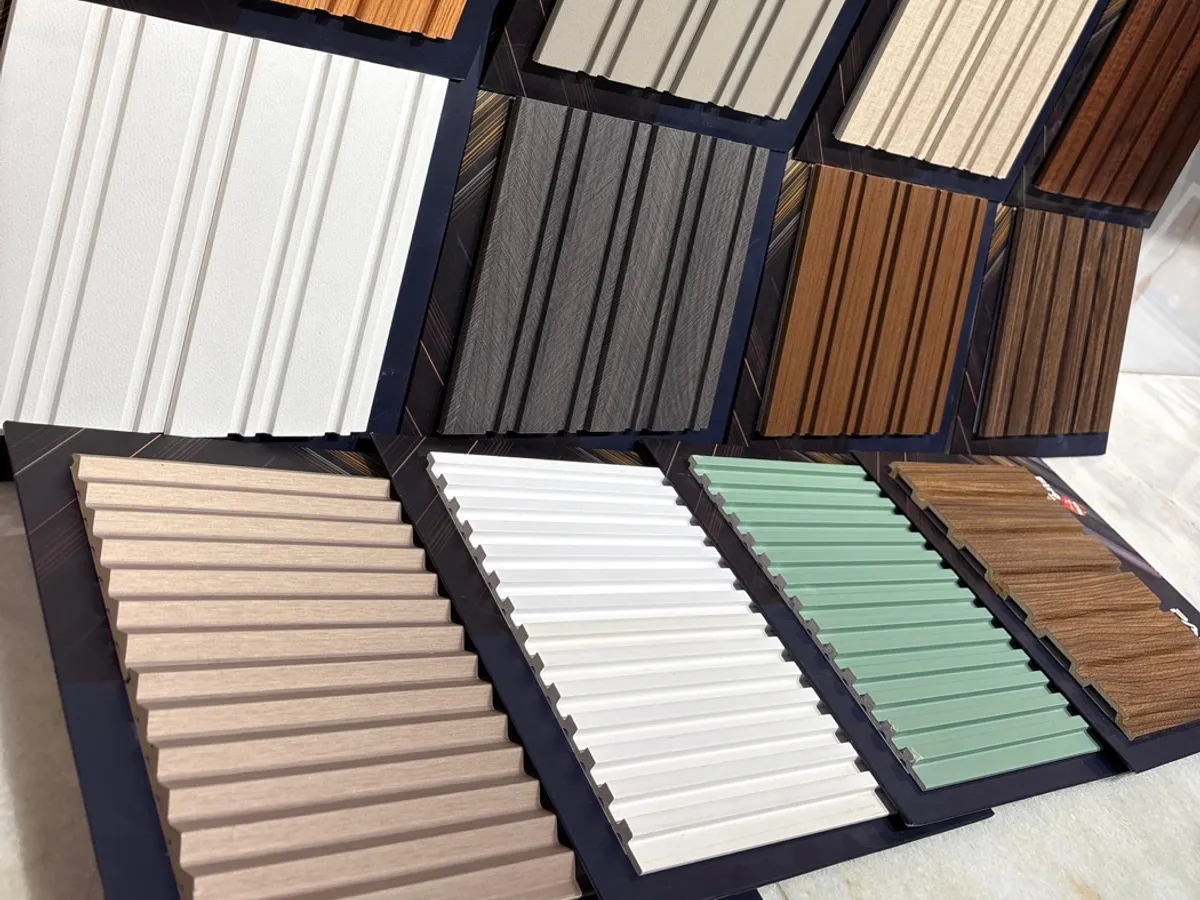
| Louvers / fluted panels | Ribbed wall panels, often PVC, WPC or MDF |
Which Indian standard covers decorative laminates?
Decorative laminates in India are specified under IS 2046, a Bureau of Indian Standards specification. It defines HPL as resin-impregnated paper layers bonded by heat and a pressure of at least 7 MPa, and it separates standard, post-forming and fire-rated types. The standard was revised into eight parts in 2025.
The 1995 edition classed laminates by use, from light-duty vertical surfaces up to heavy-duty horizontal worktops and compact sheets. The 2025 revision splits the standard into eight parts covering general requirements, test methods and separate classes such as compact, floor-grade and exterior-grade laminate. BIS has allowed the old and new editions to run side by side until 24 March 2027, so you may see either one referenced.
For a home buyer the practical point is simple. Ask which standard and type the sheet is made to, and keep the brand's design code and thickness on your bill.
How do you choose laminate for kitchens and wardrobes?
Start with where the panel goes, then pick the type and finish. Our laminate finishes guide covers suede, gloss and textured faces in detail.
| Where it goes | Type to ask for | What to watch |
|---|---|---|
| Kitchen shutters | Decorative outside, liner inside | A finish that hides fingerprints; sealed edges near the sink |
| Wardrobe shutters | Decorative outside, liner inside | Long shutters need both faces laminated to stay flat |
| Cabinet interiors | Liner | Light colours make interiors easier to see into |
| Rounded counter or table edge | Post-forming | Needs a carpenter who has bent laminate before |
| Tabletops and study desks | Decorative, in a harder-wearing finish | Textured or matt faces hide small scratches |
| Washroom partitions, lockers | Compact | Heavy; order cut to size |
If you are still deciding between a printed surface and real wood, read veneer vs laminate before you book the carpenter.
What should you ask for at the laminate counter?
- The type, not just "sunmica": decorative, liner, post-forming or compact.
- The thickness for each part of the job, and whether the carpenter wants a liner for the inside faces.
- The design code and finish, written on the bill, so a later sheet can match.
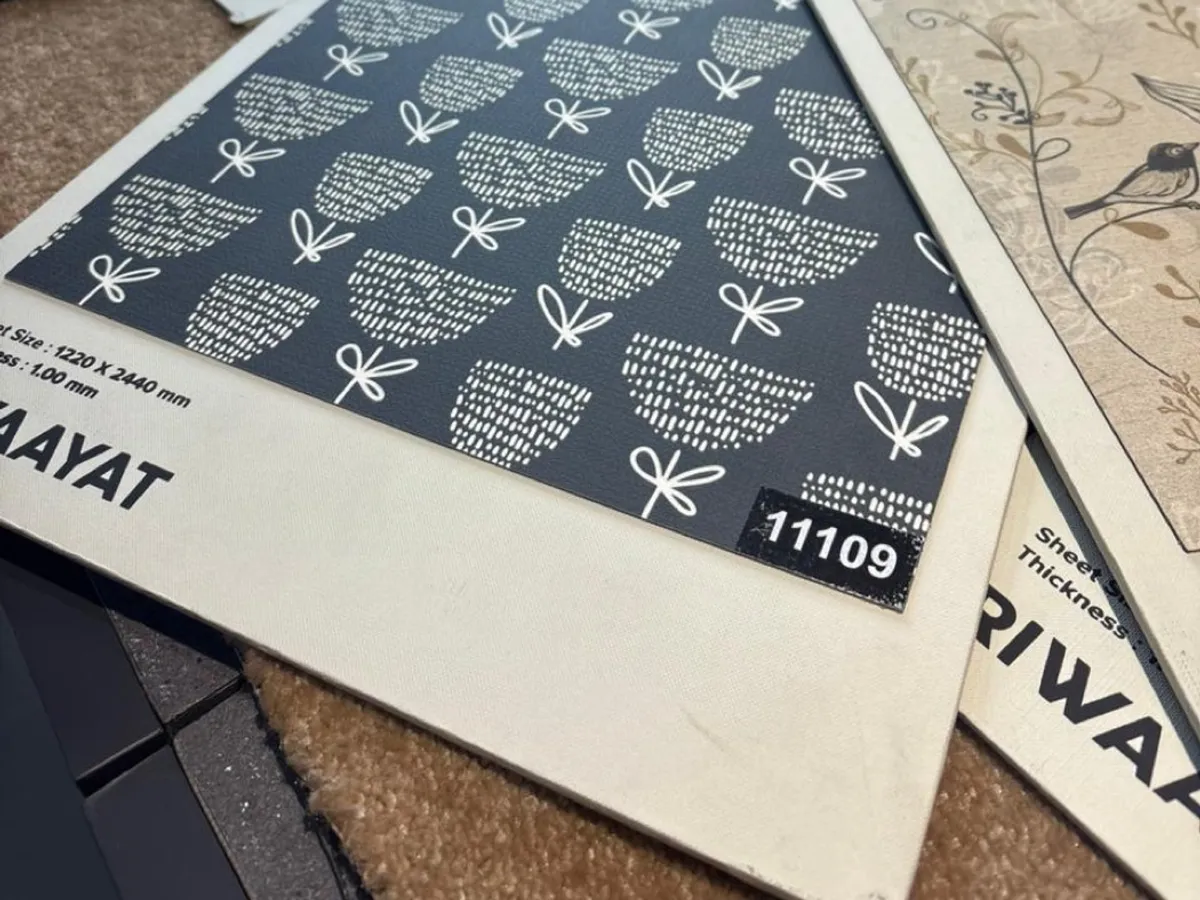
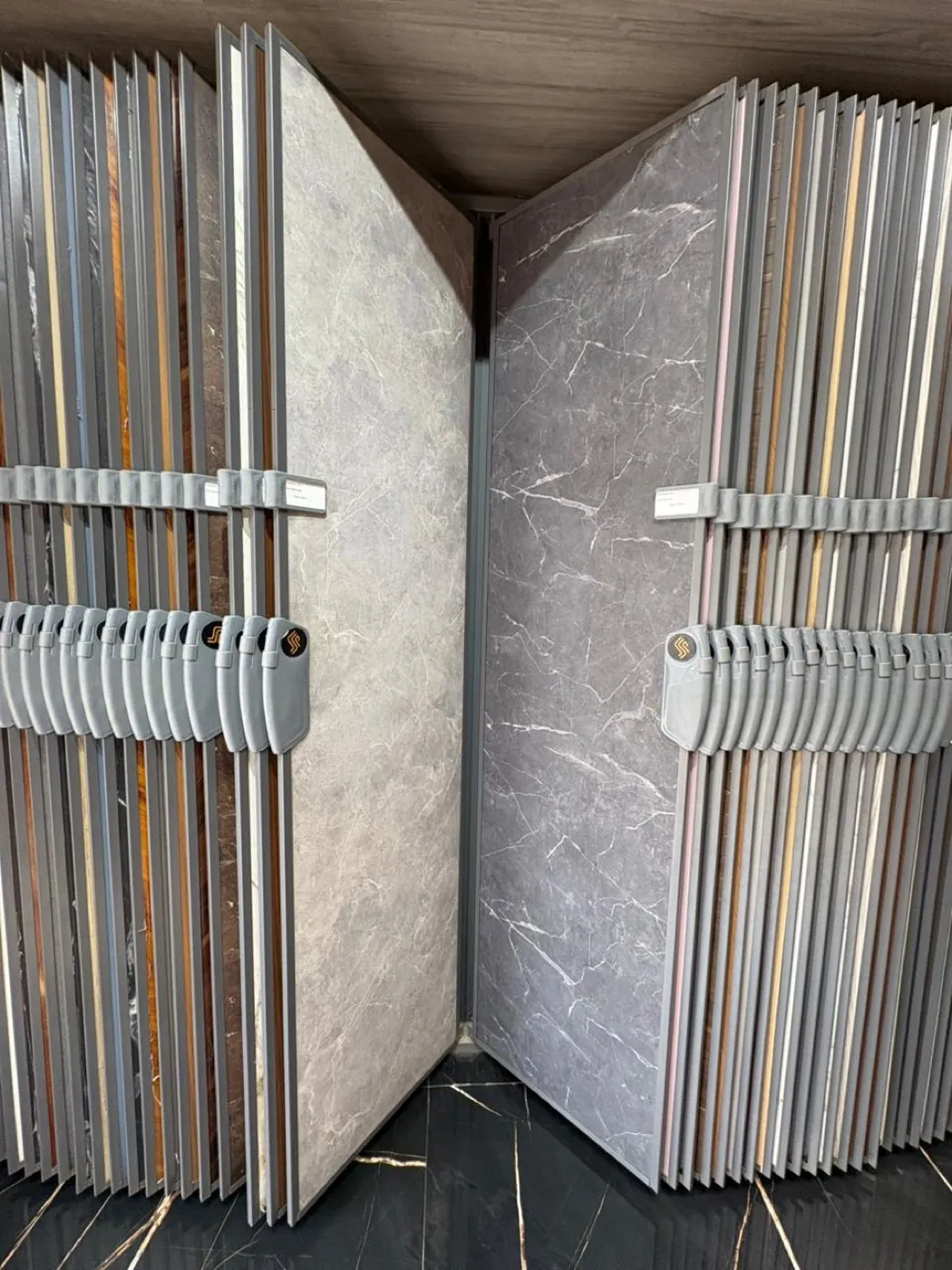
- A full-sheet view of the design, or a photo of it, before you commit a whole kitchen to a small sample.
- Edge-banding in a matching colour for every exposed board edge.
Bring your carpenter's material list to either showroom and an advisor will translate it into types and thicknesses.
The Sri Sri Plywoods rule: call it sunmica, mica or laminate, but buy it by type, thickness and design code. Those three details decide the result, and none of them needs the most expensive sheet in the shop.