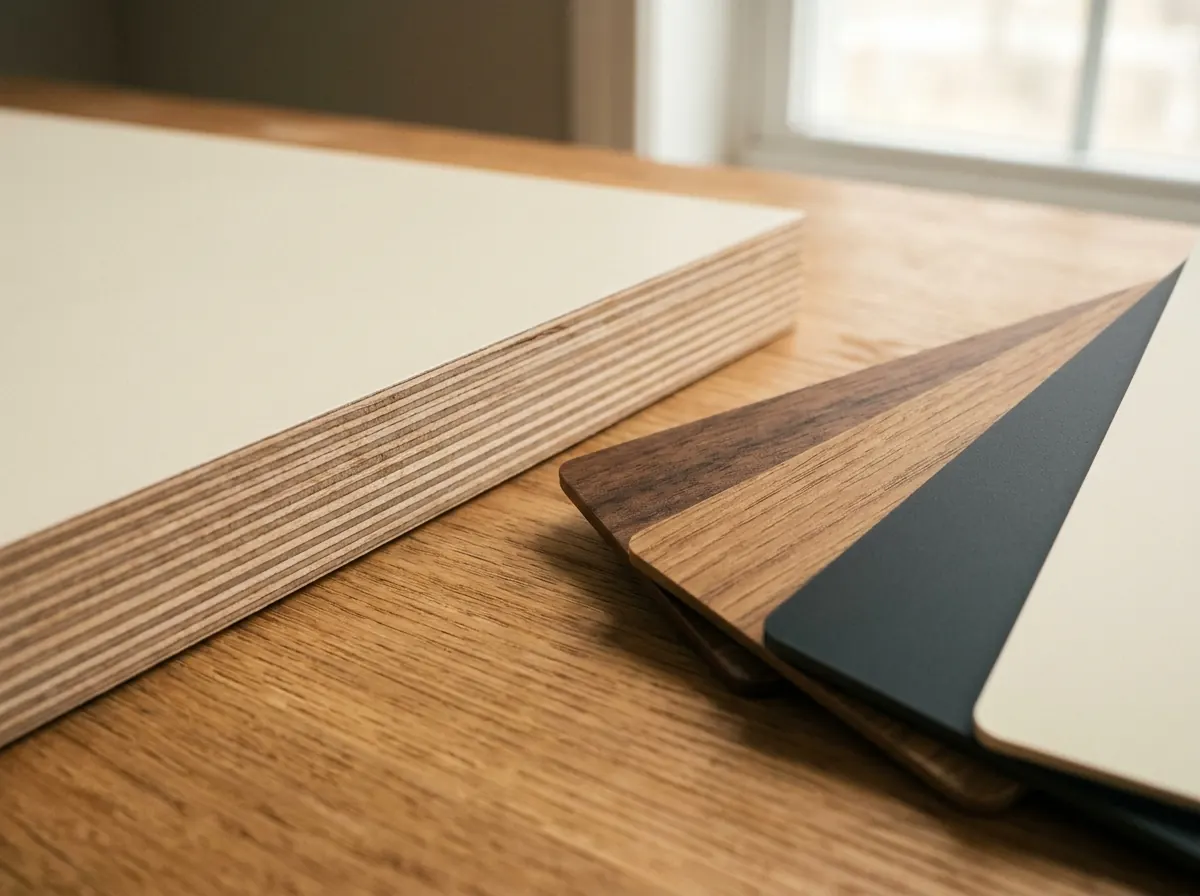
In this guide
- The grade is about the glue and the water test the bond passes — not about how premium the brand is.
- MR is for dry rooms, BWR is the minimum for any kitchen cabinet, and BWP or Marine goes wherever water sits.
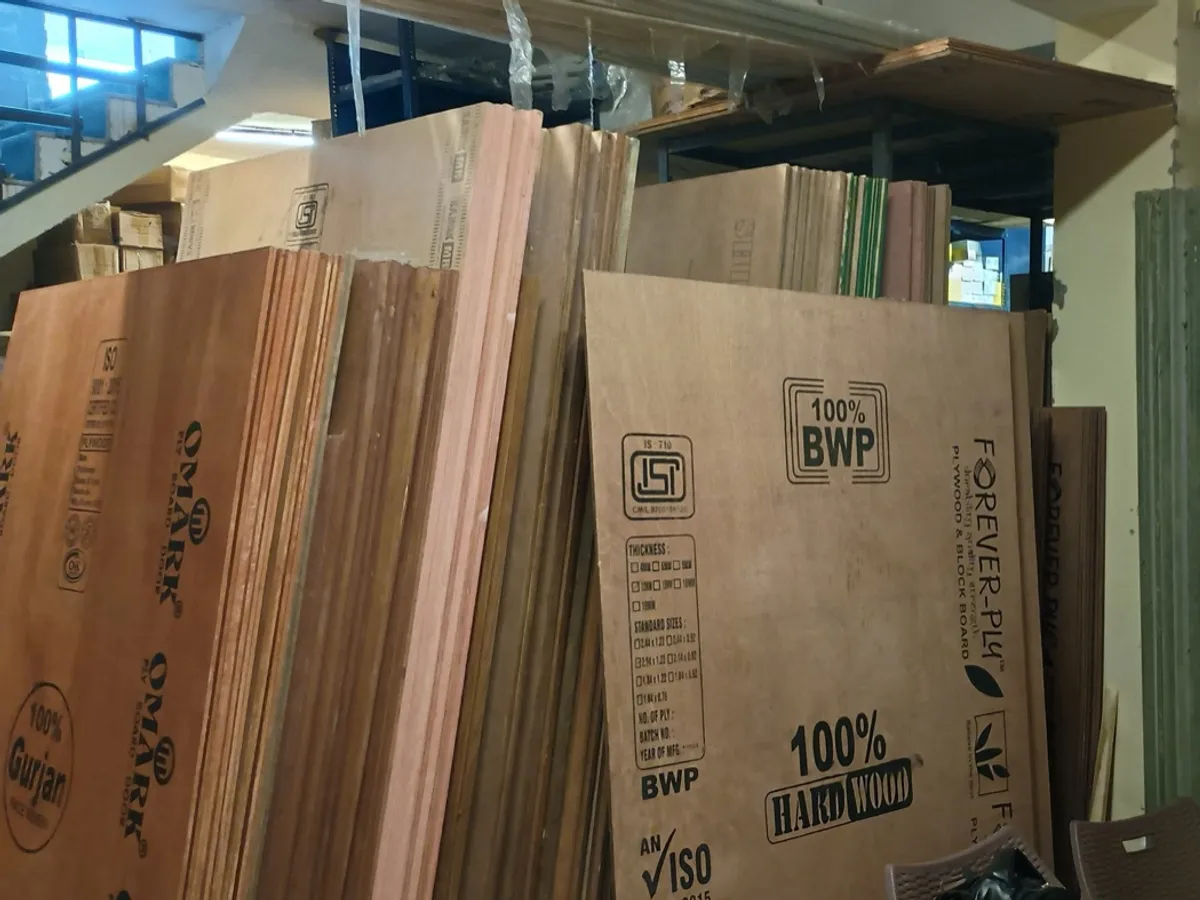
- Marine plywood is made to IS 710; BWP is a grade within IS 303. The stamp on the sheet tells you which one you are buying.
- Before any sheet is cut, check the ISI mark, the CM/L licence number, the edge, the thickness and the paperwork.
- 18–19 mm is the workhorse thickness for carcasses, shutters, shelves and bed frames.
What is the difference between MR, BWR, BWP and Marine plywood?
The difference is the glue and the water test the bond has to pass. MR plywood uses urea-formaldehyde resin and is tested in 60°C water for 3 hours. BWR is tested in boiling water for 8 hours. BWP and Marine plywood are bonded with phenol-formaldehyde resin and made to survive 72 hours of boiling water. Sri Sri Plywoods stocks all four in Mohali and Ambala.
| Grade | Standard | Glue | Water test | Best for | Price tier |
|---|---|---|---|---|---|
| MR | IS 303 | Urea-formaldehyde (UF) | 60°C water, 3 hours | Wardrobes, beds, TV units, study tables | ₹ |
| BWR | IS 303 | Water-resistant resin | Boiling water, 8 hours | Kitchen cabinets away from the sink, loft units | ₹₹ |
| BWP | IS 303 | Phenol-formaldehyde (PF) | Boiling water, 72 hours | Sink base, dishwasher unit, utility cabinets | ₹₹₹ |
| Marine | IS 710 | Phenol-formaldehyde (PF) | Boiling water, 72 hours | Bathroom vanities, balcony and weather-facing cabinets | ₹₹₹₹ |
IS 303 is the Bureau of Indian Standards (BIS) specification for general-purpose plywood and now covers MR, BWR and BWP grades. IS 710 is the separate, stricter specification for marine plywood.
What does each plywood grade actually mean?
The letters describe how the sheet behaves around water — not how strong or premium the brand is. Every major brand makes more than one grade, so the grade stamp matters more than the logo.
Built for dry rooms
Handles everyday humidity but not standing water or steam. The most economical grade for wardrobes, beds, bookshelves and TV units.
For occasional splashes
A step up for rooms that see spills and steam. The usual choice for kitchen carcasses away from the sink and for loft storage.
For regular contact with water
Phenolic-bonded. Use it wherever a tap, an RO outlet, a dishwasher or a wet mop meets the cabinet.
The strictest grade
Select hardwood veneers, phenolic glue and a tougher specification. Specify it for bathroom vanities, balcony cabinets and anything facing the weather.
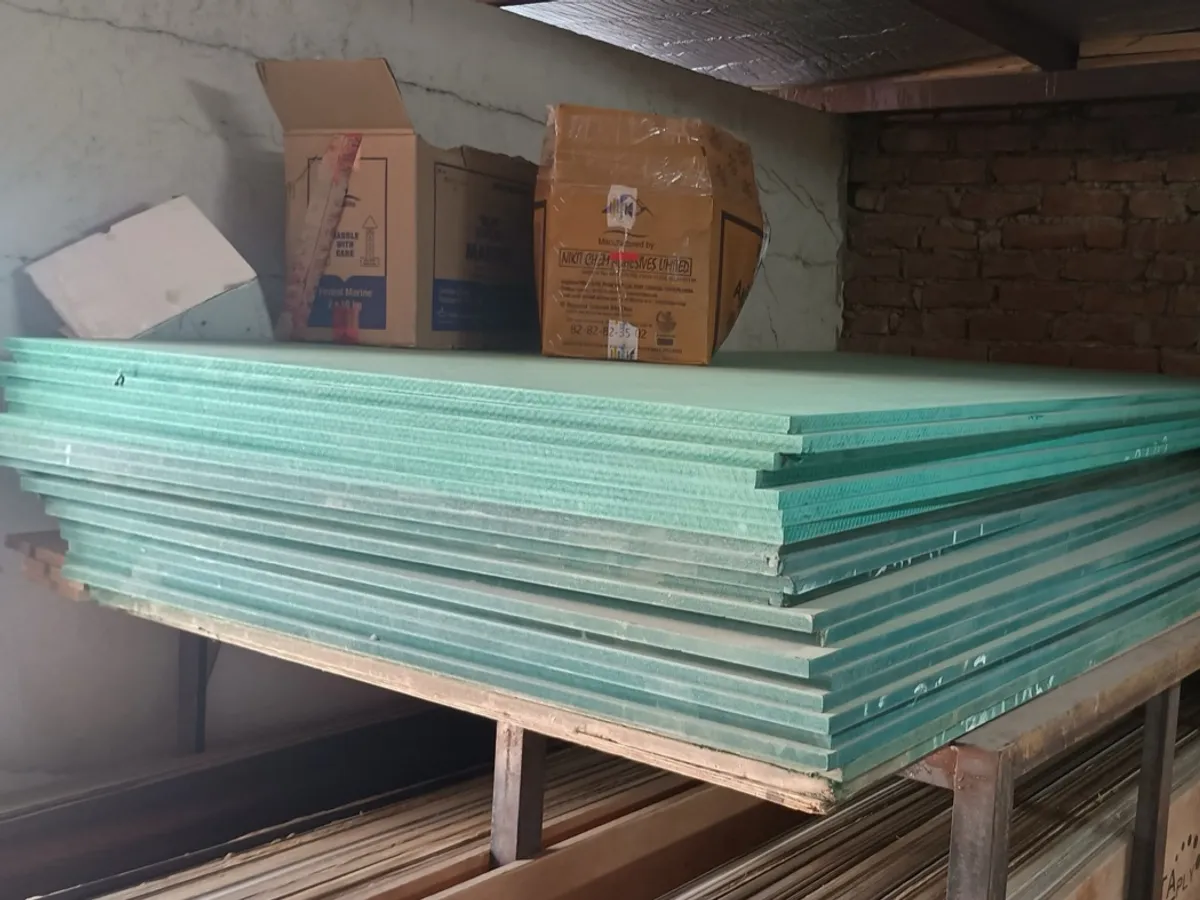
Where does HDHMR fit? HDHMR (high-density, high-moisture-resistance board) is an engineered fibre board, not plywood. It is dense, smooth and moisture-resistant, which makes it popular for kitchen shutters and wall panels. For load-bearing carcasses and long spans, plywood is still the safer default. Sri Sri Plywoods stocks Action Tesa HDHMR alongside plywood, so you can compare the two in person. For the full comparison, read HDHMR vs plywood for kitchen shutters.
Which plywood is best for kitchen cabinets in Punjab's climate?
Use BWP or Marine plywood for the sink base and any unit next to the dishwasher or RO, and BWR as the minimum for every other kitchen cabinet. Tricity's air swings from about 29% average humidity in April–May to about 80% in August, so Sri Sri Plywoods advises against MR plywood anywhere in a kitchen.
That swing is the real test. Wood-based panels take on moisture in the monsoon and give it back in the dry months, and every cycle stresses the glue line and the cut edges. Two habits make any grade last longer:
- Seal every exposed edge with edge-banding. Laminate protects the faces, not the cut edges.
- Laminate both faces — a decorative sheet outside and a liner inside — so the panel moves evenly and stays flat.
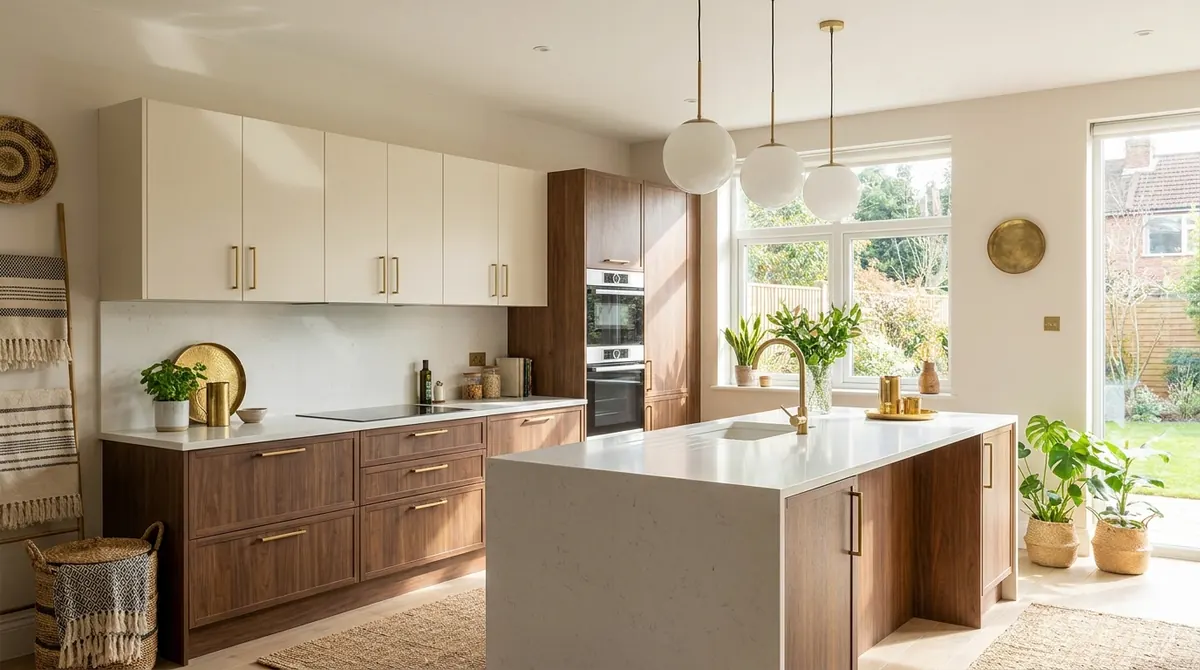
Which plywood grade should you use in each room?
Use the table below as a starting point, then match it to your layout. If a cabinet shares a wall with a bathroom or faces the monsoon side of the house, move it one grade up. Not sure when block board beats plywood? See block board vs plywood.
| Area | Minimum grade | Sri Sri recommends | Why |
|---|---|---|---|
| Kitchen sink base | BWP | BWP or Marine | Leaks and mopping water collect here |
| Other kitchen base units | BWR | BWP | Spills, steam and monsoon humidity |
| Kitchen wall & loft units | BWR | BWR | Steam rises, but no standing water |
| Bathroom vanity | BWP | Marine (IS 710) | Daily splashes and wet floors |
| Balcony & utility | BWP | Marine (IS 710) | Rain, sun and washing-machine water |
| Wardrobes | MR | BWR on external or bathroom walls | Dry inside, damp walls in the monsoon |
| Beds, TV units, study tables | MR | MR | Dry zone — a higher grade adds cost, not life |
| Long shutters & partitions | Block board | Block board | Stays straight over long spans |
Need today's rate?
Get a free quoteIs BWP plywood the same as marine plywood?
Not quite. Both use phenol-formaldehyde glue, but BWP is a grade within IS 303, the general-purpose plywood standard, while Marine plywood is made to IS 710, a separate and stricter specification that also covers veneer quality and bond strength. At Sri Sri Plywoods, the standard printed on the sheet — 303 or 710 — tells you which one you are buying.
That is why the trade calls marine plywood "710 plywood". If a sheet is sold as marine but the stamp reads IS 303, you are buying BWP — a good sheet, but not the one you asked for. For a bathroom vanity or an open balcony, insist on the 710 stamp.
How do you identify original ISI-marked plywood?
To identify original ISI-marked plywood, check the stamp, the licence number, the edge and the thickness before any sheet is cut. These five checks take a few minutes and work at any shop — including the Sri Sri Plywoods showrooms in Mohali and Ambala, where every grade is on display to compare.
- Find the ISI mark with the standard number (IS 303 or IS 710) and the grade (MR, BWR or BWP) printed on the face.
- Note the CM/L licence number under the ISI mark and verify it in the official BIS Care app.
- Look at the edge. The core veneers should be tightly packed, with no gaps, overlaps or filler.
- Measure the thickness with a vernier. An 18mm sheet should measure close to 18mm.
- Ask for the paperwork — the brand's warranty card, and a GST bill that names the grade and thickness.
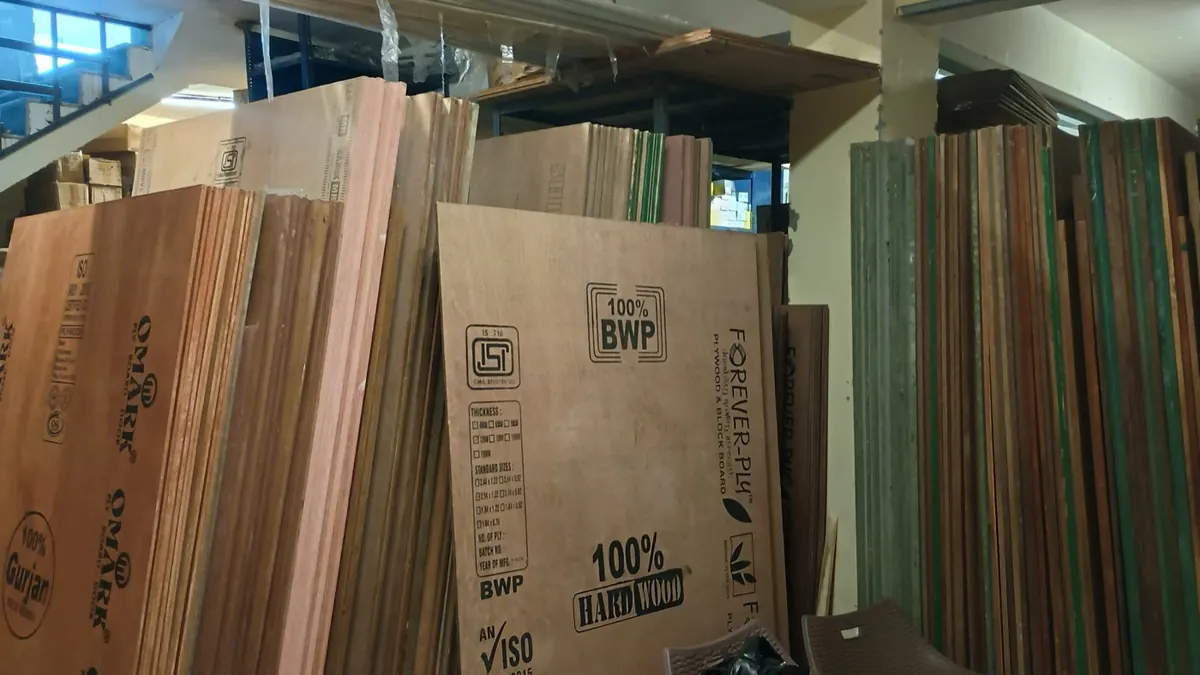
Which plywood thickness suits furniture and cabinets?
Grade decides how a sheet handles water; thickness decides what it can carry. Most home furniture uses just three sizes. To work out how many sheets a job needs, see how many plywood sheets you need.
| Thickness | Typical use |
|---|---|
| 6 mm | Back panels of wardrobes and cabinets, drawer bottoms |
| 9 mm | Wall panelling and light partitions |
| 12 mm | Drawer boxes and light shelves |
| 18–19 mm | Cabinet carcasses, shutters, shelves and bed frames — the workhorse size |
| 25 mm | Heavy table tops and long unsupported shelves |
What are the most common mistakes when buying plywood?
- Paying marine prices for a bedroom wardrobe. In a dry room, MR or BWR does the job.
- Putting MR under the kitchen sink "because it is laminated". Water gets in through the cut edges and hinge holes.
- Buying by brand name alone. Big brands make every grade — read the stamp.
- Comparing quotes across different grades or thicknesses. Line them up like for like before you compare the rate.
- Skipping edge-banding on exposed edges. It is the cheapest protection a cabinet can get.
The Sri Sri Plywoods rule is simple: you should never be up-sold a sheet you don't need. Bathrooms need BWP or better; a bedside table does not. Before you buy, also check what a sheet's termite and borer claims actually cover — or see every grade in person.