In this guide
- Veneer is real wood sliced thin and glued to a board; laminate is layers of resin-soaked paper with a printed design.
- Laminate resists scratches and stains better and cleans with a damp cloth; veneer needs polish and more careful use.
- Veneer can be sanded and re-polished when it wears; a damaged laminate usually has to be replaced.
- Both need sealed edges and the right plywood grade underneath to survive the Tricity monsoon.
- A common, sensible mix is veneer on one feature surface and laminate on the hard-working furniture.
What is the difference between veneer and laminate?
The difference in laminate vs veneer is what the surface is made of. Veneer is a thin slice of real wood glued to plywood or board and then polished. Laminate is a man-made sheet of resin-soaked papers with a printed design. Veneer gives genuine grain; laminate gives easier upkeep. Sri Sri Plywoods helps you choose room by room.
| Feature | Veneer | Laminate |
|---|---|---|
| What it is | A thin slice of real wood | Resin-soaked papers with a printed design |
| Look and feel | Genuine grain; no two sheets alike | Consistent design; wood, stone, solid colours and more |
| Finishing | Needs polish or lacquer after fixing | Ready-finished from the factory |
| Scratches and stains | More easily marked | Resists scratches and stains well |
| Everyday care | Gentle cleaning; periodic re-polish | Damp cloth and mild soap |
| Repair | Can be sanded and re-polished | Damaged sheet is usually replaced |
| Best for | Statement walls, dining tables, feature doors | Kitchens, wardrobes, children's rooms, busy surfaces |
| Price tier | ₹₹₹–₹₹₹₹ | ₹–₹₹ |
Both are skins on a board. The strength of the furniture still comes from the plywood or board underneath, so the choice between them is about looks, upkeep and budget, not structure.
What is wood veneer, exactly?
Veneer is timber cut into sheets thin enough to glue onto a panel. Modern decorative veneers can be well under a millimetre thick. The way the log is cut decides the pattern you see:
Peeled from a turning log
The log spins against a blade and the veneer comes off in a long sheet. It is widely used for plywood layers, with a broad, varied grain.
Sliced across the growth rings
The log is sliced flat, giving a grain that looks like a plank of sawn timber, the pattern most people picture on a wooden door or table.
For a showier grain
A half-round lathe cut, set up to expose the most interesting parts of the grain for a more textured figure.
Because each slice comes from a real log, no two veneer sheets are identical. That is the whole appeal, and also why a large surface needs sheets chosen and matched in sequence so the grain flows.
Which lasts longer, veneer or laminate?
For everyday wear, laminate lasts longer with less effort. Its hard resin face resists scratches, stains and spills, and it needs no polishing. Veneer is more easily scratched and marked, but it can be sanded and re-polished, so a well-kept veneer surface can be renewed where a damaged laminate would have to be replaced.
Both makers' own guidance points the same way: laminates are described as highly resistant to stains and scratches, while real wood veneers are more prone to scratches and need polishing when they are marked. That makes laminate the safer choice for children's rooms, study tables, kitchen base units and anything that gets knocked daily.
Heat is a caution for both. Neither surface should take a hot pan, iron or kadhai straight from the flame; use a trivet or a mat. And both can fade or change colour under long direct sun, so a west-facing wall of either benefits from curtains in summer.
How do you maintain veneer and laminate?
- Laminate: wipe with a soft cloth or sponge and a mild soap solution. No steel scrubbers, scouring pads, bleach or wax polish.
- Veneer: dust with a soft cloth and wipe spills immediately. Keep mop water off the lower edges, and avoid harsh cleaners that attack the polish.
- Veneer polish: touch up or redo the finish when it dulls or wears through, especially on tabletops and door edges.
- Both: keep away from standing water, direct heat and long, strong sun.
The difference over ten years is mostly time and attention. Laminate asks for a wipe; veneer asks for a little care every day and a polisher every few years, depending on use.
Weighing veneer or laminate?
Get a free quoteCan veneer or laminate be repaired?
Veneer's big advantage is that it can be renewed. Light scratches and a dull, worn finish can be sanded back and re-polished, which is why a veneered dining table can look fresh again after years of use. Deep gouges or veneer lifting at an edge need a skilled carpenter, but they can often be fixed in place.
Laminate is harder to repair. A chip, burn or deep scratch cannot be sanded out, because the design is a printed layer under the face. Small chips can sometimes be filled, but they usually still show. A badly damaged shutter is normally re-laminated or replaced, which is simple on a single door and harder when the design has since been discontinued. Keep the design code on file for exactly that reason.
How do veneer and laminate handle the Tricity monsoon?
Humidity affects the whole panel, not just its face. Both veneer and laminate sit on plywood or board that takes on moisture in the monsoon and gives it back in the dry months, and every cycle tests the glue line and the cut edges.
Veneer is the more sensitive of the two. Thin-sliced wood still moves with humidity like any timber, and once the polish wears through, moisture can reach it; that is when veneer tends to lift at an edge or show dark marks. Laminate's resin face is far less affected, but the board beneath it still moves, which is why both surfaces need the same care at the edges and on the inside face.
- Seal every edge with edge-banding or solid lipping. Water gets in through edges, not faces.
- Balance both faces: a veneer or laminate outside needs a surface on the inside too, so the panel stays flat.
- Choose the board by the room: see our guide to plywood grades for which grade goes where.
- Keep veneer away from the sink and bathroom splash zones; laminate on BWP plywood is the better choice there.
Laminate or veneer: which should you choose for each room?
| Where | Our suggestion | Why |
|---|---|---|
| Living-room statement wall | Veneer | Real grain reads beautifully on a large, low-touch surface |
| Dining table top | Veneer, or a hard-wearing laminate | Veneer can be re-polished; laminate resists daily spills |
| Wardrobe shutters | Laminate, or veneer on a feature door | Handled daily; laminate hides marks |
| Kitchen base units | Laminate | Oil, water and knocks every day |
| Kitchen tall units or island panel | Either | Less splash; veneer works with care |
| TV unit and bed back | Either | Low wear; choose by look |
| Children's rooms, study tables | Laminate | Scratches, pens and spills |
| Bathroom vanity | Laminate on BWP plywood | Constant splashes |
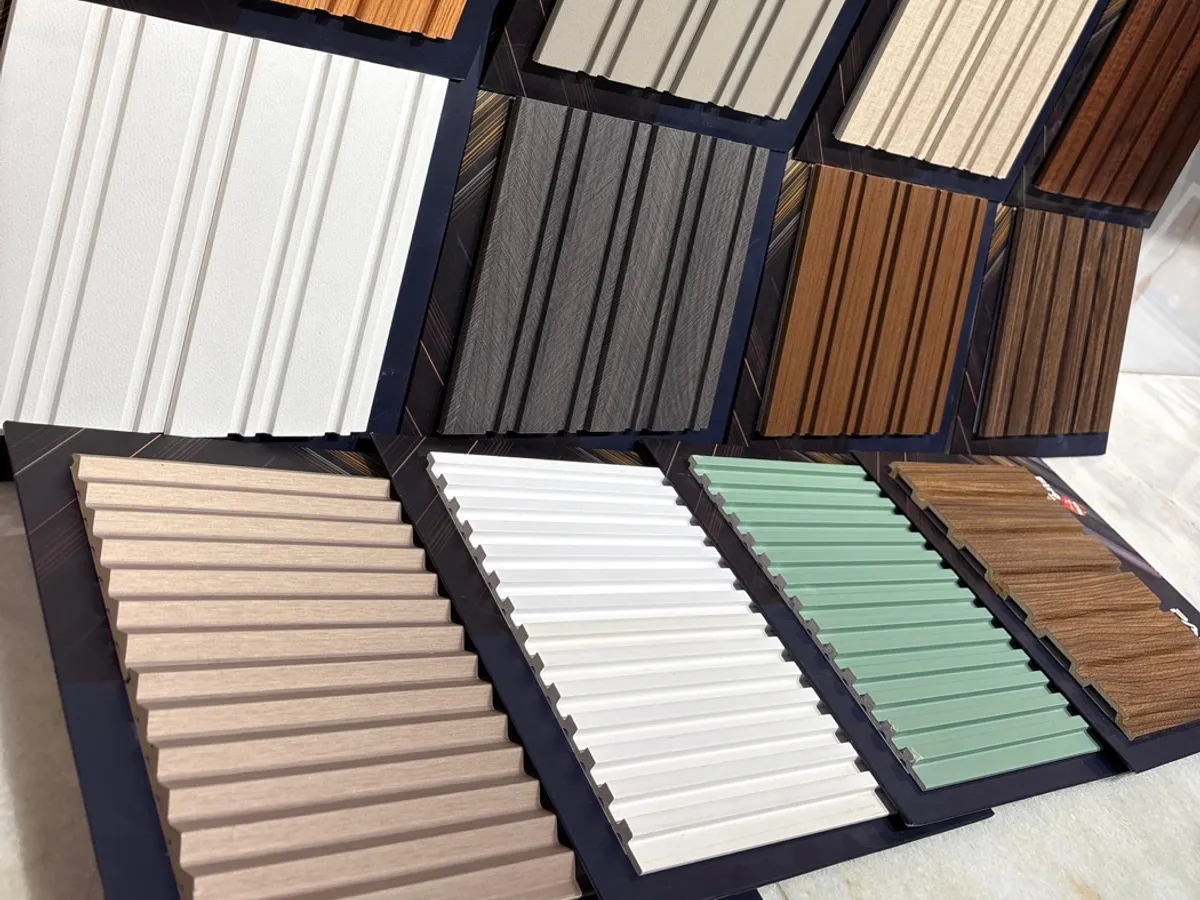
If you choose laminate, our guides to laminate finishes and laminate thickness cover the next decisions. For a textured wall rather than a flat one, see fluted panels and louvers.
How should you compare veneer and laminate before you buy?
- Take a photo of the room and its light, and note which surfaces get the most handling.
- Look at large sheets, not small chips, of the veneer and the wood-grain laminate you're weighing.
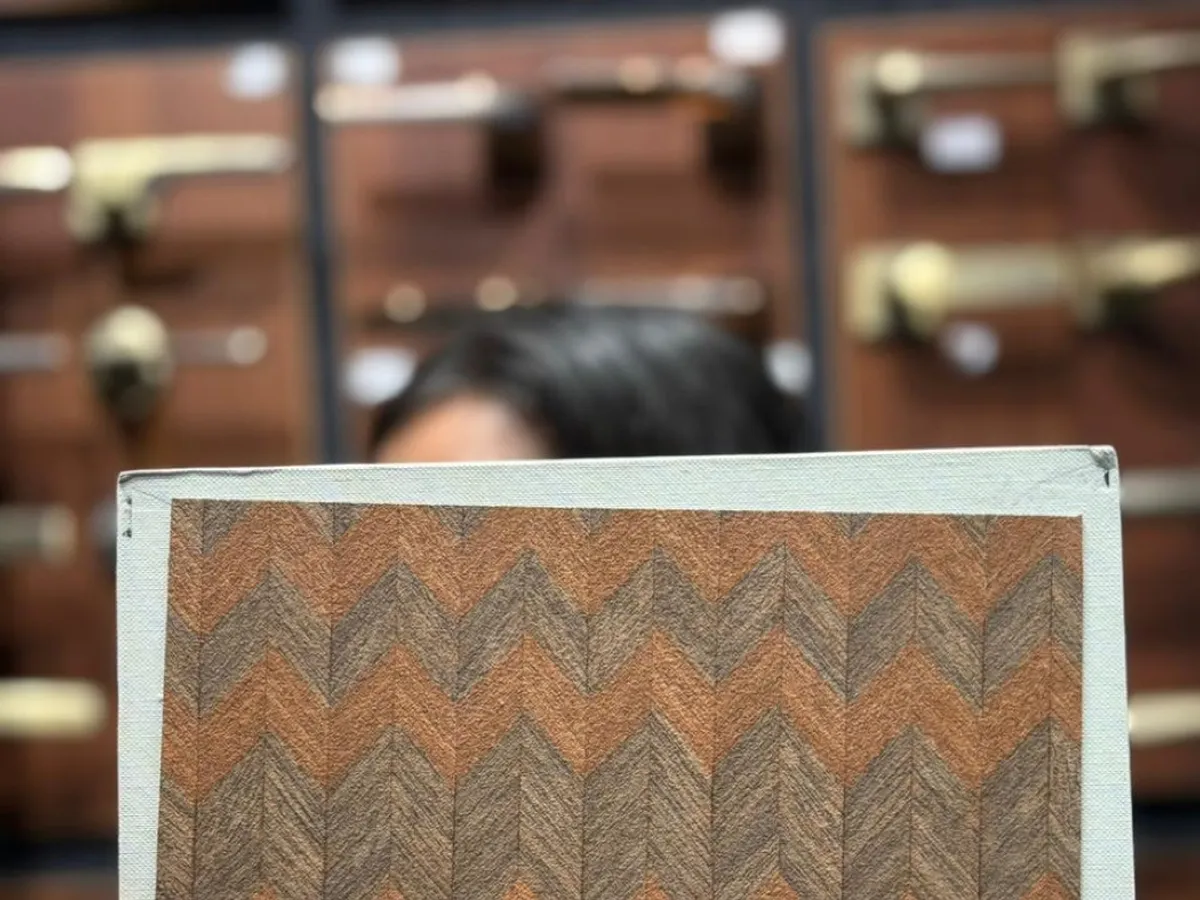
- Touch and tilt them under daylight: veneer has real depth; good textured laminate comes close.
- Ask about finishing: who polishes the veneer, with what, and how long it takes.
- Write down codes for the design, finish and thickness of every sheet on your order.
When you're ready, visit either showroom with your room photos, and an advisor will walk you through the laminate options and how they compare with veneer.
The Sri Sri Plywoods rule: put veneer where people will look, and laminate where people will touch. You rarely need real wood on a kitchen base unit, and a well-kept veneer dining table can be re-polished and enjoyed for years.