In this guide
- Laminate is the practical default: it resists everyday heat, stains and scratches, and costs the least.
- Acrylic and PU are premium finishes; both show fingerprints and fine scratches more than a matte laminate.
- Membrane (PVC foil) can lift or peel with sustained heat, so keep it away from the hob side.
- A damaged PU shutter can usually be re-sprayed; laminate, acrylic and membrane faces are generally replaced.
- The board under the finish and sealed edges matter as much as the finish itself.
What are the main kitchen shutter finishes?
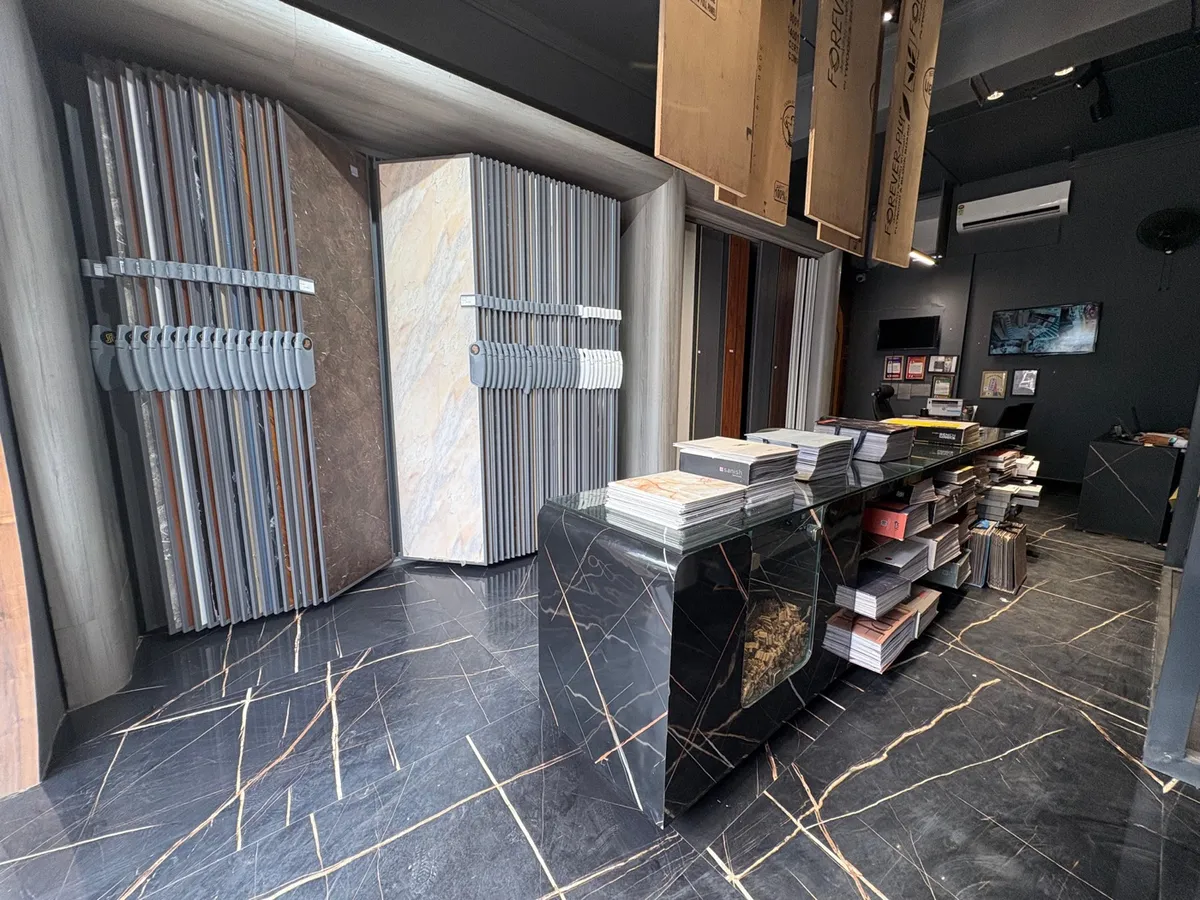
The four common kitchen shutter finishes are laminate, a decorative sheet pressed onto the board; acrylic, a high-gloss sheet bonded to the board; PU, a polyurethane paint sprayed on in several coats; and membrane, a thin PVC foil heat- and vacuum-pressed onto MDF. Sri Sri Plywoods shows each finish in its Mohali and Ambala showrooms.
Every finish sits on a board, usually plywood, MDF or HDHMR. The finish decides the look, how the surface handles heat and oil, and how it can be repaired. The board decides how the shutter handles moisture and holds its hinges.
The practical default
A decorative sheet pressed onto the board, then edge-banded. It comes in matte, gloss, suede, textured and wood-grain finishes, and handles daily wear well.
The high-gloss look
A glossy acrylic sheet bonded to the board. It gives a deep, mirror-like surface and strong colours, but shows fingerprints easily.
The painted finish
Polyurethane paint sprayed in coats, sanded between layers and cured. It gives seamless edges and almost any colour, in matte or gloss.
The shaped finish
A thin PVC foil heat- and vacuum-pressed onto MDF. It wraps grooves, curves and edges without edge-banding, but is sensitive to sustained heat.
Laminate vs acrylic vs PU: which handles heat, oil and scratches best?
No finish wins on every count. The table compares them on the things that matter in a working Indian kitchen.
| Finish | Look | Heat near the hob | Scratches and marks | Repair | Upkeep | Price tier |
|---|---|---|---|---|---|---|
| Laminate | Matte to gloss, textures, wood grains | Good for everyday heat | Good; matte hides marks best | Replace the sheet or shutter | Easy | ₹ |
| Membrane | Smooth, wrapped edges, matte or gloss | Weak; can lift or peel with sustained heat | Fair | Hard to repair or match | Easy, but no harsh cleaners | ₹₹ |
| Acrylic | High gloss, deep colour | Good for everyday heat | Fair to good; fine scratches show on gloss | Replace the sheet or shutter | Frequent wiping | ₹₹₹ |
| PU | Seamless painted finish, any colour | Good for everyday heat | Fair; chips and scratches show | Can usually be sanded and re-sprayed | Gentle cleaning | ₹₹₹₹ |
The pattern is clear: the glossier and more seamless the finish, the more care it asks for. That is a trade-off, not a flaw. A family that cooks twice a day and has young children may be happier with a textured laminate on the base units than with a flawless gloss.
Which shutter finish suits a heavy-tadka Indian kitchen?
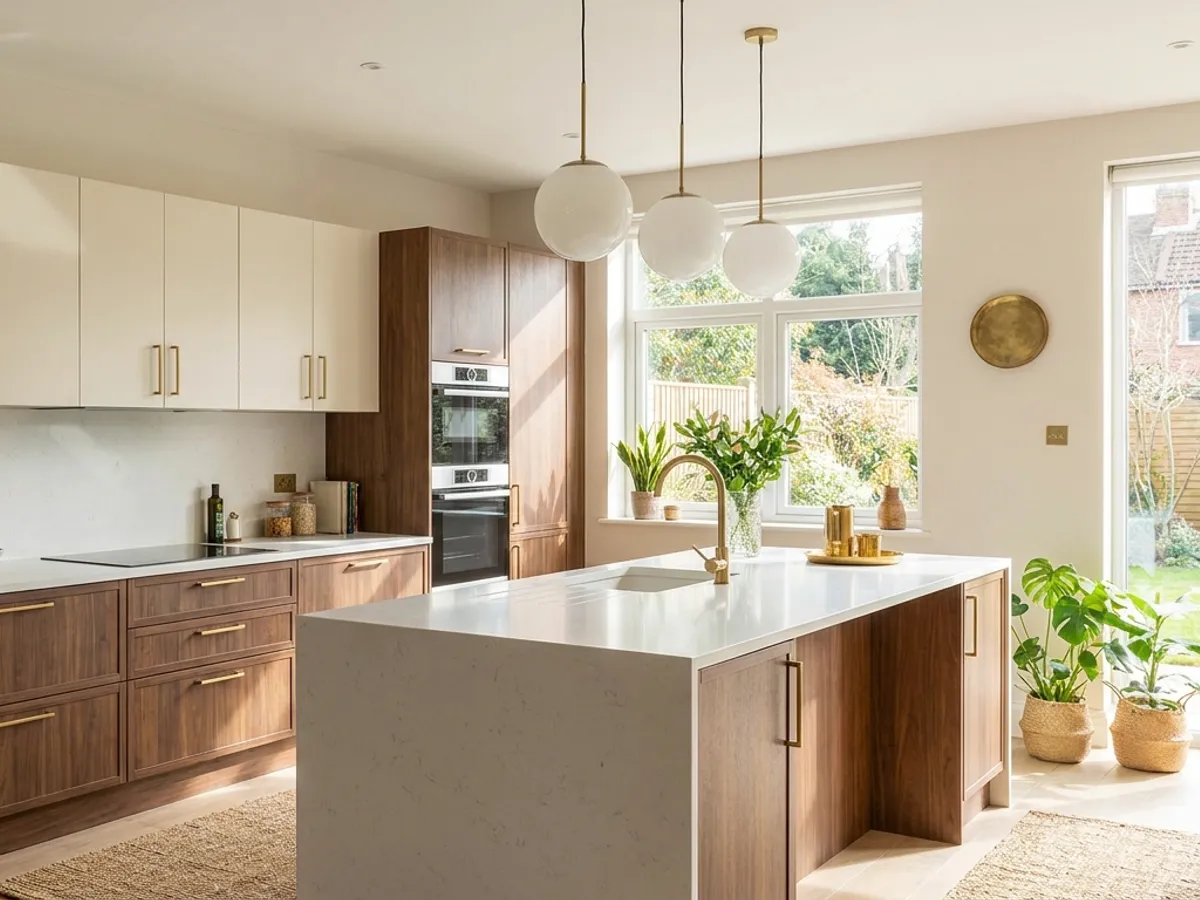
For kitchens with daily tadka, deep frying and pressure cooking, a matte or textured laminate is the safest shutter finish near the hob, and acrylic or PU suits the wall units and areas away from direct heat. Avoid membrane beside the cooktop. A well-planned chimney, like the ones Sri Sri Plywoods plans into every kitchen, protects any finish.
Tadka is hard on a kitchen. Hot oil spits, steam rises, and the air carries a fine film of grease that settles on every surface. Three habits help any finish last:
- Run the chimney whenever you cook, and clean or service its filters on schedule.
- Leave counter space on both sides of the hob, so hot pans never rest against a shutter.
- Wipe oil splashes the same day. Grease that sets is harder to remove and tempts people towards harsh cleaners.
Is acrylic better than PU for kitchen shutters?
Both are premium finishes, and the choice is mostly about look and repair.
Acrylic is a factory-made sheet, so the gloss is consistent from shutter to shutter. Colours come from the brand's range. If a face is badly scratched or chipped, the sheet or the shutter is usually replaced.
PU is sprayed, so it can be matched to almost any colour, and its edges are painted along with the face for a seamless look. It shows chips and scratches more readily than acrylic, but a damaged shutter can usually be sanded and re-sprayed in a workshop instead of being thrown away.
Sri Sri Plywoods cuts its kitchen shutters on CNC machines and PU-finishes them in its own workshop, so the finish is applied in controlled conditions rather than on site. The kitchens are delivered factory-finished and installed by Sri Sri's own team.
Choosing a finish?
Get a free quoteWhy do membrane shutters peel near the hob?
Membrane is a thin PVC foil bonded to MDF with adhesive under heat and vacuum. Sustained heat can soften that bond, and the foil can then lift, bubble or peel, often starting at an edge. High humidity and poor adhesive make it worse.
That does not make membrane a bad finish everywhere. Its real strength is shape: it wraps grooves, curved edges and moulded profiles that a laminate sheet cannot follow. Use it for wall units and shaped shutters well away from the cooktop and the oven, not for the units on either side of the hob.
Which board should sit under the shutter finish?
A finish is only as good as the board beneath it. Laminate and acrylic work on plywood, MDF or HDHMR. PU and membrane need a smooth, dense surface, so they usually go on MDF or HDHMR.
Our comparison of HDHMR vs plywood explains which board suits which shutter, and our guide to plywood grades covers the water resistance of each grade. Whatever the board, protect the edges.
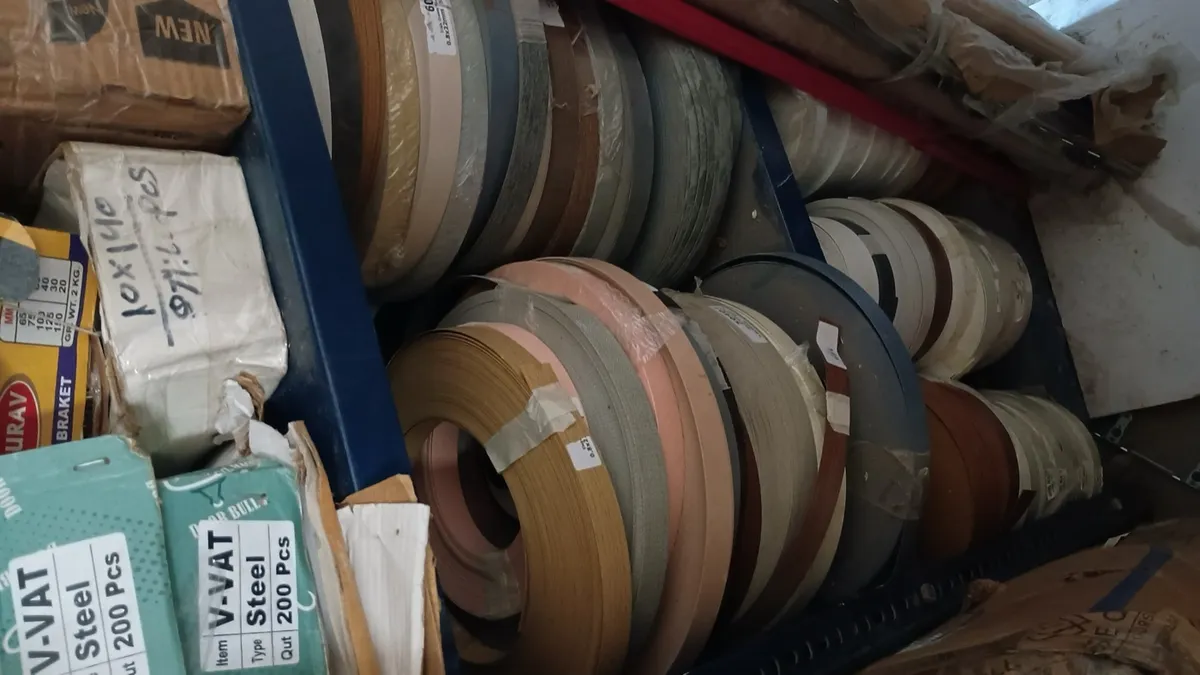
- Seal every cut edge with edge-banding that matches the finish. Water gets in through edges, not faces.
- Laminate the inside face too. A liner on the back keeps the shutter balanced so it stays flat.
- Use BWP plywood or a moisture-resistant board for the sink-unit shutters.
How should you choose your kitchen shutter finish?
Start with how you cook, then how you clean, then how you want the kitchen to look. If the answer to the first two is "every day, and quickly", choose laminate for the base units and spend on a premium finish where it shows most. You can also compare laminate textures in our laminate finishes guide.
Then think about cleaning. Laminate takes a damp cloth and a mild detergent. Acrylic and gloss PU need a soft microfibre cloth, because abrasive scrubbers and harsh solvents leave fine scratches and dull the shine. Membrane dislikes both harsh cleaners and heat. Whatever you choose, ask for the brand's care instructions at handover and keep them with the warranty.
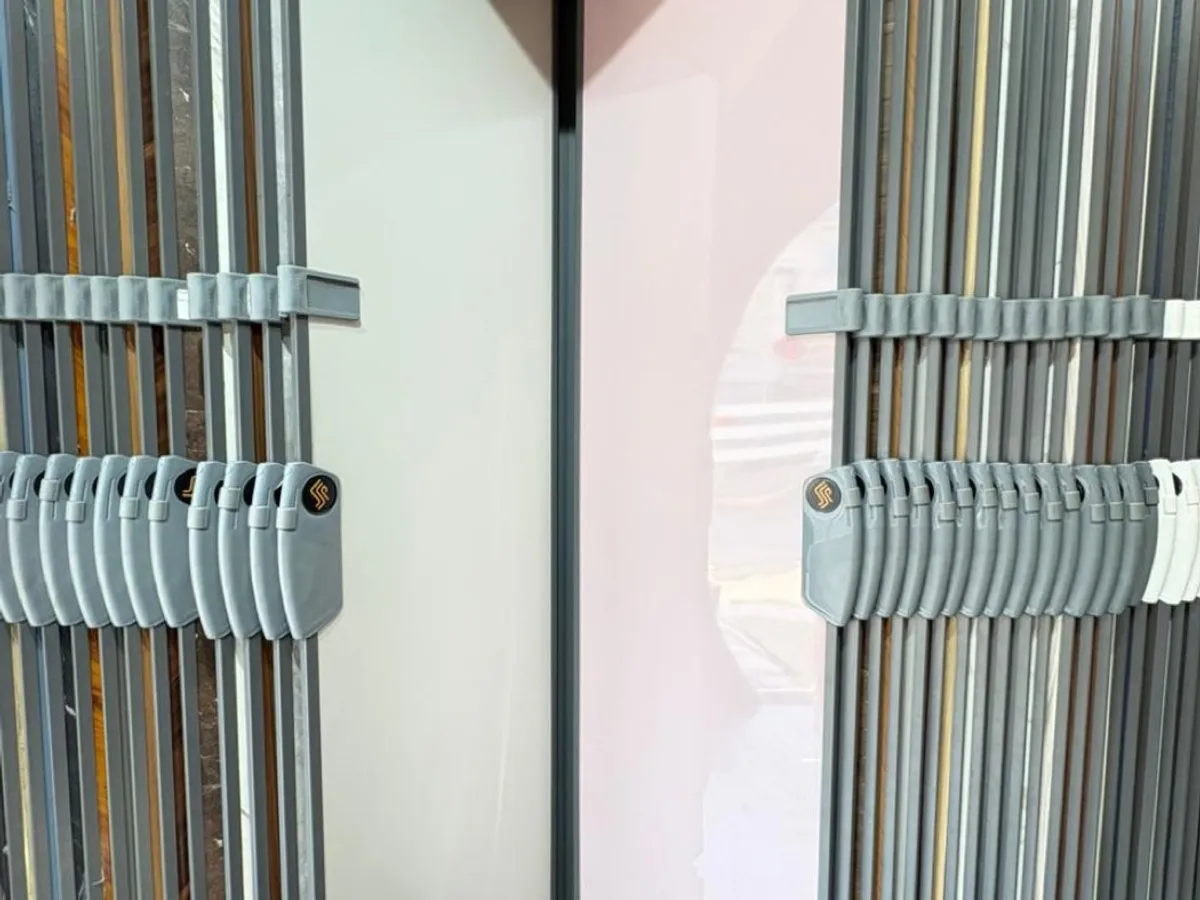
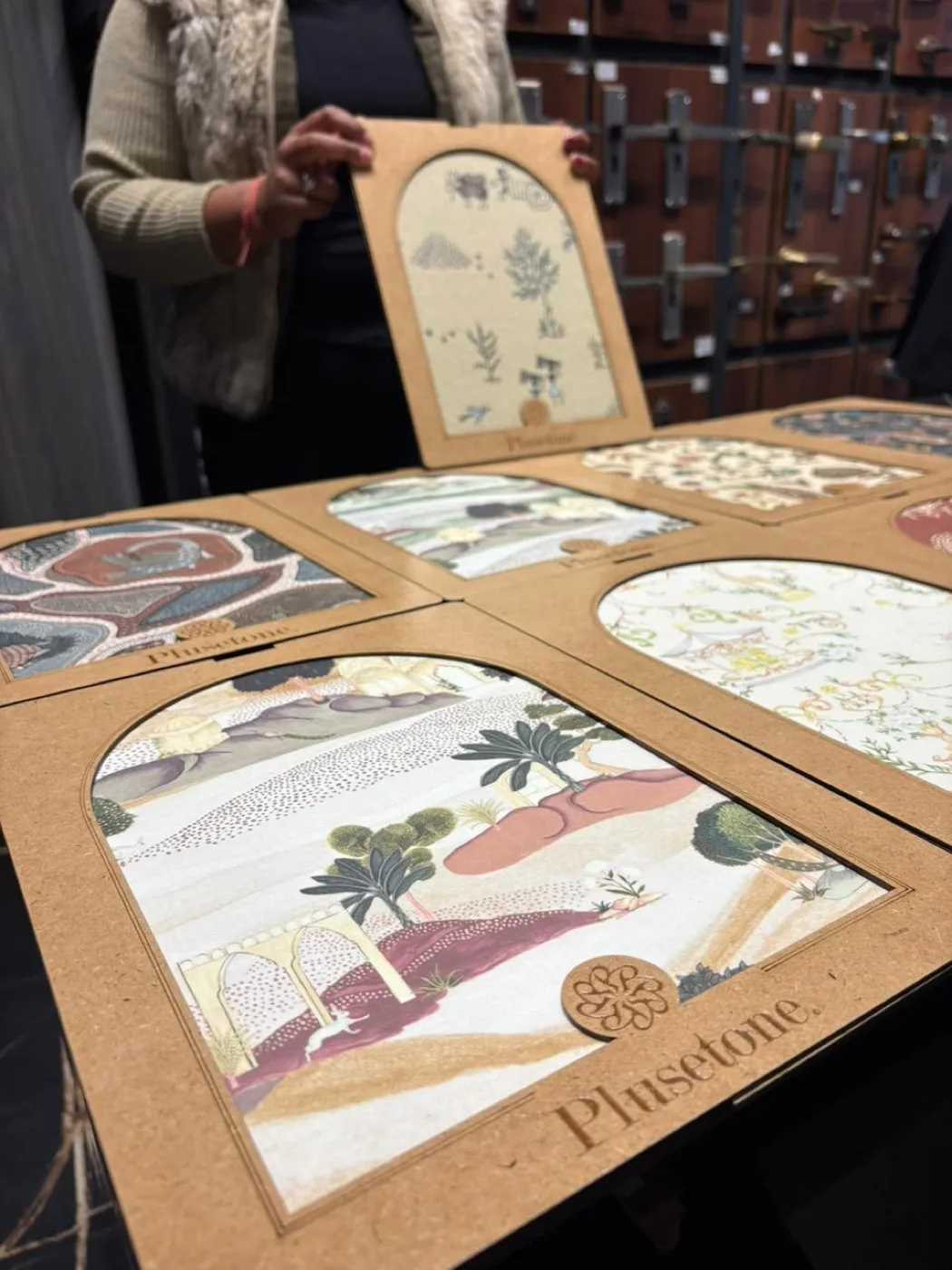
Bring your family to the showroom and handle the samples. Rub a fingertip over a gloss sample and see how the fingerprint shows. Look at a matte sample under the light you will have in your kitchen. See the full kitchen service in the kitchen section on our homepage.
The Sri Sri Plywoods rule: choose the finish for the kitchen you cook in, not the one in the brochure. A textured laminate that still looks good in ten years beats a gloss that needs daily polishing.