In this guide
- Start with the four that earn their space daily: cutlery, plate and thali, utensil storage and a tall pantry unit.
- A blind corner in an L or U kitchen is worth a magic corner or carousel; a straight kitchen does not need one.
- SS 304 has more nickel and chromium than SS 202 and resists rust better, so use it near the sink and hob.
- Wire baskets are cheaper and airier; box-style drawers are easier to clean and hold small items better.
- Plan baskets by the cabinet's internal width before it is built, not after.
Which modular kitchen baskets do you actually need?
In most Indian kitchens, four baskets earn their space daily: cutlery, plate and thali, deep utensil storage, and a tall pantry pull-out for atta, dal and rice. Add a bottle pull-out near the hob, and a corner unit only for a blind corner. Sri Sri Plywoods plans modular kitchen baskets cabinet by cabinet.
Baskets are where a modular kitchen budget quietly grows. Every extra pull-out looks useful in a catalogue, but a basket you rarely open costs as much as one you open twenty times a day. Start from how you cook, then add units only where they solve a real problem.
What are the main types of kitchen baskets?
Top drawer, daily use
A shallow tray with compartments for spoons, ladles and knives. Usually the first drawer next to the hob or sink.
Upright or flat
Holds plates, thalis and katoris on edge or stacked, so they drain and air. Often placed next to the sink.
Deep and strong
A plain deep basket or drawer for kadhais, pressure cookers and patilas. Needs strong runners.
Narrow, near the hob
A tall, slim pull-out for oil bottles, masala jars and sauces, within reach of the cooktop.
Floor to wall-unit height
Several shelves on one frame that pull out together. Holds atta and rice dabbas, dal jars and groceries.
For blind corners
Magic corners and carousels bring the back of an L or U corner within reach.
Indian cooking shapes this list. Pressure cookers, kadhais and large patilas need deep, strong storage low down, and that is why Sri Sri Plywoods designs its kitchens with pull-outs sized for pressure cookers, not just a standard shelf. Thalis and katoris need a basket that lets them drain, and masala dabbas belong within an arm's reach of the hob.
Is a pull-out pantry unit worth it for atta and dal?
Usually yes, if you have the wall. A tall pull-out pantry unit puts atta, rice and dal dabbas at standing height and brings the whole column out at once, so nothing gets lost at the back. Sri Sri Plywoods designs its modular kitchens with tall units sized for atta dabbas, planned around the containers you already use.
Tall units come in two broad styles. A larder pull-out slides the full column of shelves out of the cabinet. A swing and pull-out unit adds baskets on the back of the door as well. Hettich's Cargo range, for example, includes the Cargo Larder, which it lists for cabinet widths of 300, 400 and 450 mm with shelves adjustable in height, and the Cargo Duo swing and pull-out pantry.
Measure your largest atta dabba before you choose. The shelf spacing and the load rating both have to suit it.
Think about who will reach into it, too. Keep the heaviest dabbas on the middle shelves, between knee and shoulder height, so nobody has to lift a full container from the floor or down from above their head. Lighter packets, spare masalas and snacks can go at the top and bottom.
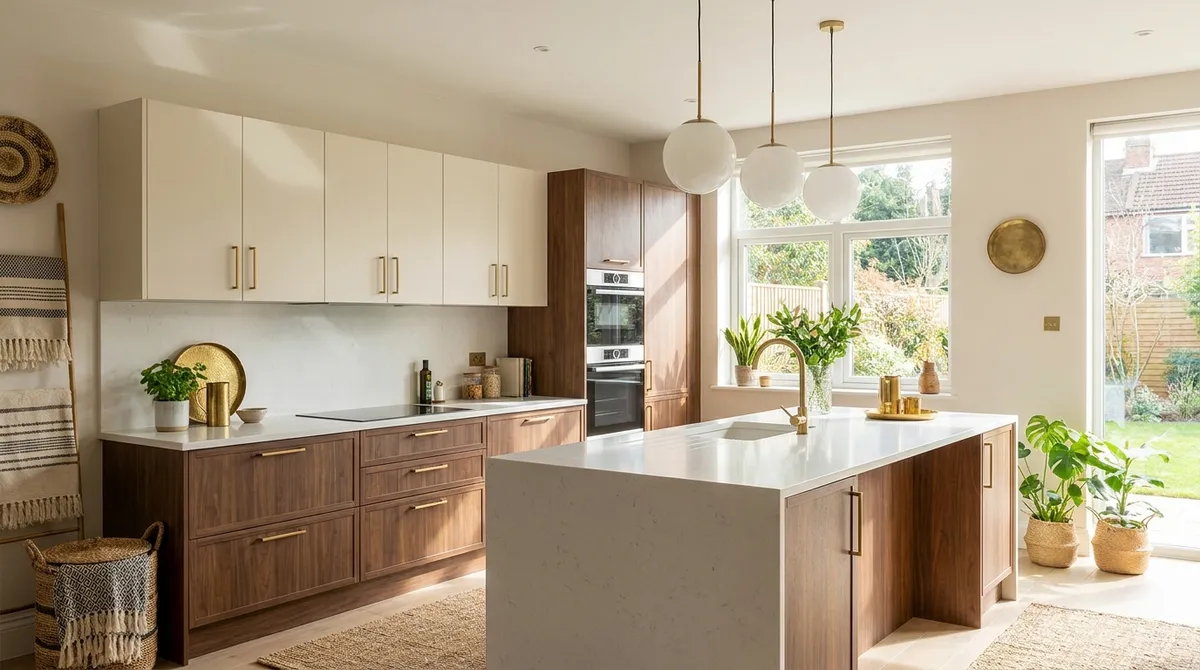
Which kitchen corner storage fittings suit a blind corner?
A blind corner is the hidden space where two runs of cabinets meet in an L or U kitchen. If you are still choosing a layout, our guide to modular kitchen layouts shows where corners appear. Without a corner storage fitting, it becomes the place where rarely used vessels disappear. The main options:
| Option | How it works | Example | Tier |
|---|---|---|---|
| Magic corner | Front and rear baskets pull out in stages, bringing the corner to you | Ebco Magic Corner Double Pullout; Hettich Cargo Magic | ₹₹₹–₹₹₹₹ |
| Pull-and-turn corner | Baskets pull out, then turn 90° out of the corner | Ebco Magic Corner Max 90 | ₹₹₹ |
| Carousel | Shelves revolve around a central pole | Hettich Cargo Carousal | ₹₹ |
| Moving shelves | Independent shelves move out of the corner | Hettich Cargo Man | ₹₹–₹₹₹ |
| Plain corner shelf | Fixed shelf, reached by hand | Any | ₹ |
Ebco says both shelves of its Magic Corner Double Pullout pull out completely, with soft close. Hettich lists its Cargo Carousal and Cargo Magic with a 20 kg capacity. Whichever you choose, check the load rating against your heaviest vessels.
Planning a kitchen?
Get a free quoteSS 304 or SS 202: which steel for kitchen baskets?
Choose SS 304 for baskets near the sink, hob and dishwasher. According to Jindal Stainless, SS 304 has about 18% chromium and 8% nickel, while SS 202 has 4–6% nickel and more manganese, so 304 resists rust better in wet, humid spots. SS 202 costs less and suits dry areas.
Tricity's monsoon adds moisture to every cabinet, and washed vessels go into baskets still damp. That is the case for SS 304 below the worktop. Ask for the grade in writing on the bill, and look for the maker's name on the basket. Hettich, for example, states a 10-year replacement warranty against rust on its stainless-steel Cargo accessories.
- Wipe baskets dry after loading wet thalis and katoris.
- Avoid bleach and acid cleaners on the steel; mild soap and water are enough.
- Line the sink-base cabinet with a mat, since leaking pipes are a common cause of rust.
Wire baskets or tandem-box drawers: which is better?
| Wire baskets | Box-style (tandem) drawers | |
|---|---|---|
| Airflow | Open; wet vessels dry faster | Closed sides; less airflow |
| Small items | Can slip through the gaps | Stay put on a solid bottom |
| Cleaning | Wires collect grime at joints | Wipe-clean panels |
| Look | Functional | Clean, modern fronts |
| Price tier | ₹–₹₹ | ₹₹₹–₹₹₹₹ |
A common mix: wire baskets for plates and thalis, box drawers for cutlery, spices and dry goods. Whichever you pick, lift the basket out every few weeks and clean the corners, where oil, dust and masala collect. Our comparison of telescopic vs tandem drawer channels explains the runners behind each.
How do you plan baskets by cabinet width?
Baskets are made for specific cabinet widths, so the order matters: choose the baskets first, then size the cabinets around them.
- List what you store, drawer by drawer: cutlery, plates, vessels, dry goods, bottles, cleaning supplies.
- Place by use. Cutlery and masala near the hob, plates near the sink, heavy vessels low, groceries in the tall unit.
- Check each basket's size chart against the cabinet's internal width. Hettich's Cargo IQ bottle pull-out, for example, is listed for 150, 200 and 300 mm cabinets.
- Check the load rating of the basket and its runners against its heaviest contents.
- Leave the sink base open for pipes, the RO unit and a waste bin, rather than forcing a basket in.
A basket is only as good as the runners under it. A fully loaded thali or utensil basket is heavy, so ask for its runners' load rating as well as the basket's, and choose soft close for the drawers you open most.
What should you skip on a tight budget?
- Skip the corner unit in a straight or parallel kitchen; there is no blind corner to solve.
- Skip a second bottle pull-out. One near the hob is enough for most families.
- Use plain shelves in upper units you reach into daily; baskets add little there.
- Choose a carousel over a magic corner if the budget is tight.
Adding pull-outs later works only if the cabinets were sized for them. Ask for cabinet widths that match standard basket sizes now, even where you fit a plain shelf for the time being, so an upgrade later is a simple fit rather than a rebuild.
For the hinges and runners that carry these baskets, read our soft close hinges and channels checklist. To plan the whole kitchen, see Sri Sri Plywoods' modular kitchens.
The Sri Sri Plywoods rule: buy baskets for how you cook, not for the catalogue. A kitchen with four well-chosen pull-outs works harder than one with ten you never open.