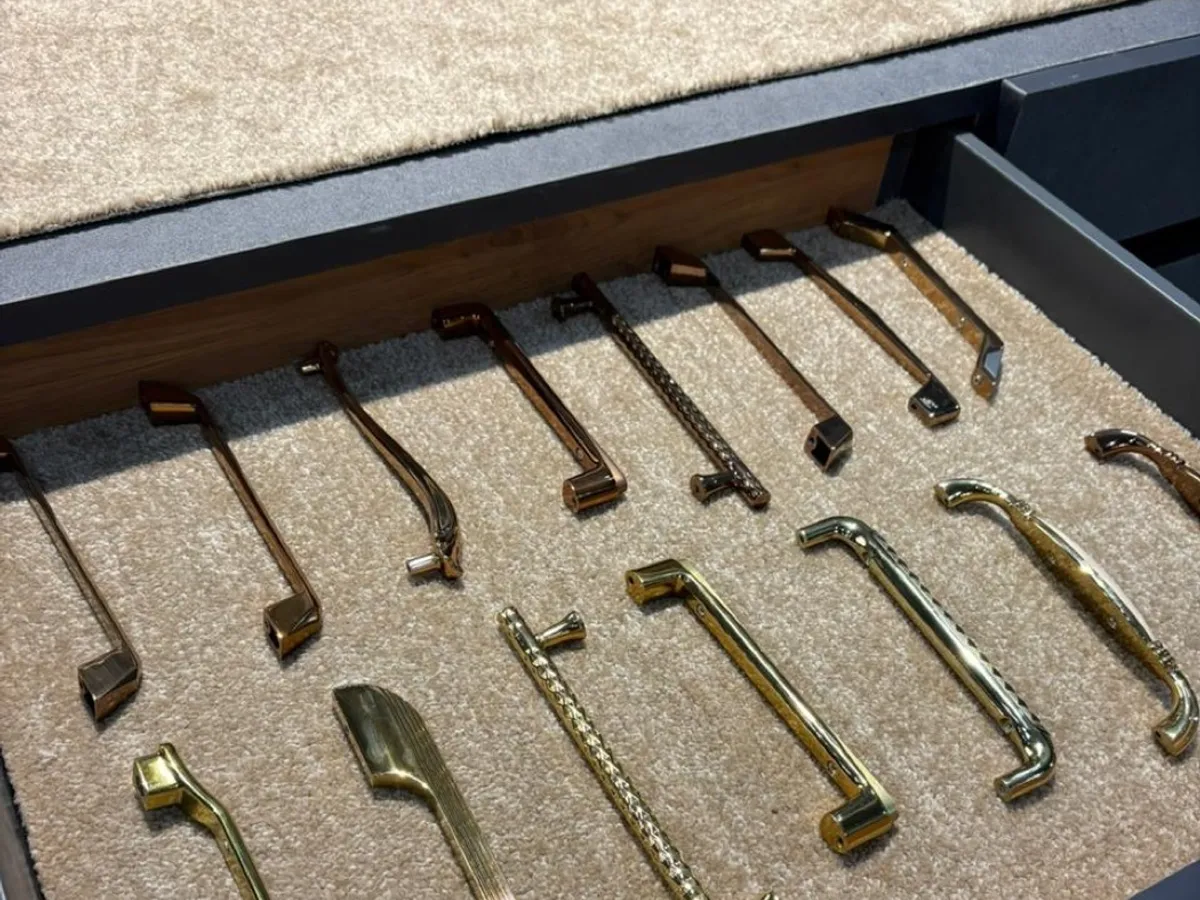
In this guide
- Choose the handle type by how the door is used first, and by looks second.
- Handle size is measured centre-to-centre between the two screw holes, not end to end.
- Many handles follow the 32 mm system, with hole spacings such as 96, 128, 160 and 192 mm.
- G-profile, gola and push-to-open all give a handle-less look, but they are fitted in different ways.
- Bar pulls that fit several fingers are easier for children and elderly users than small knobs.
What are the main types of cabinet handles?
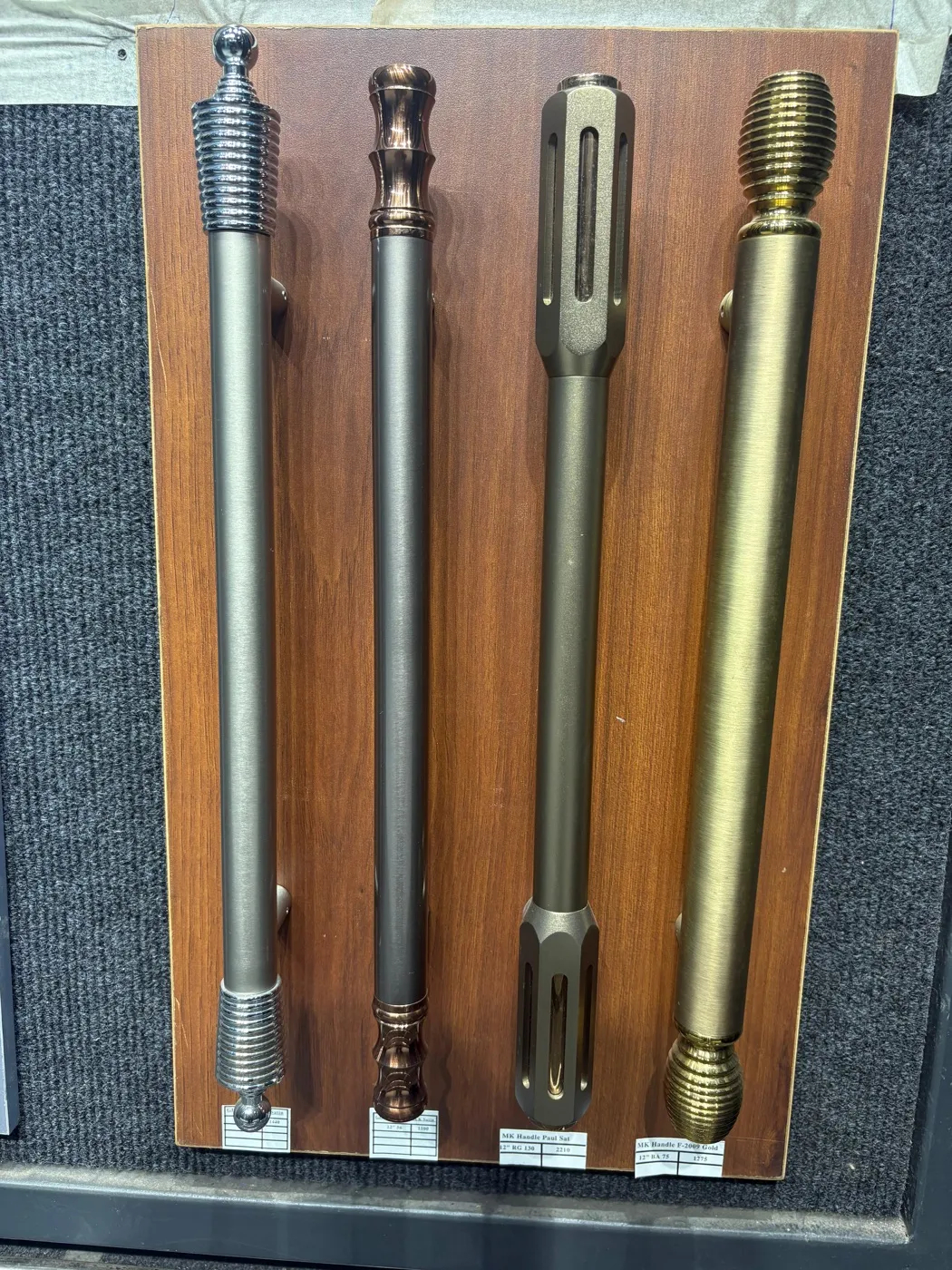
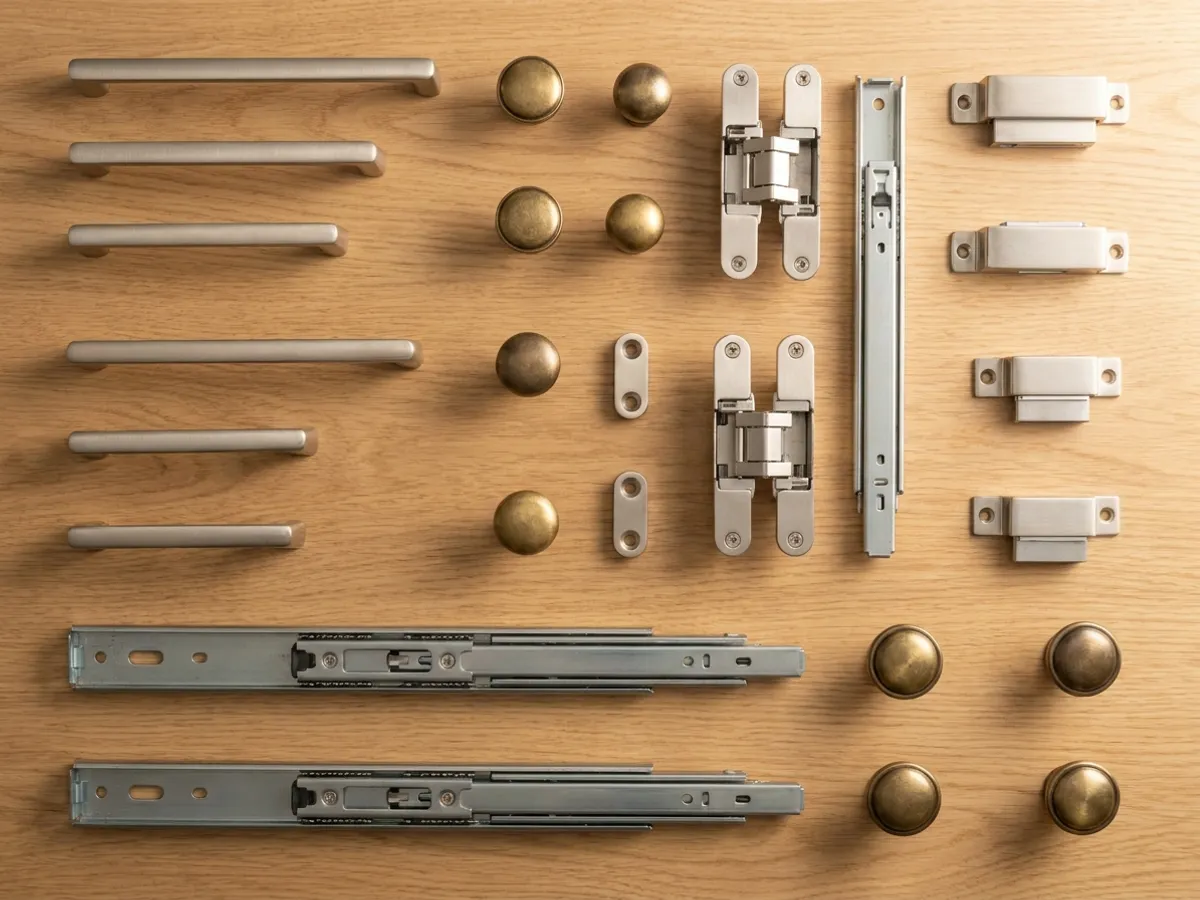
The main cabinet handle types are bar or D pulls, knobs, edge profiles, G-profiles, gola channels and push-to-open fittings. Pulls and knobs screw onto the shutter; profiles run along its edge; gola and push-to-open remove the handle altogether. Choose by how often the door is used and how heavy it is.
The everyday workhorse
A straight bar or D-shaped handle fixed with two screws. Easy to grip, and made in the widest range of lengths and finishes.
Small and simple
A single-screw knob. Neat on small, light doors, but harder to grip on heavy drawers.
Slim finger grips
A short or full-length metal lip fixed to the top or side edge of the shutter. Low and hard to snag clothes on.
Built into the shutter edge
An aluminium profile along the top of the shutter whose curved lip makes a finger grip, so the front looks handle-less.
Built into the cabinet
A recessed aluminium channel fitted in the carcass above each drawer or door. The shutters carry no handle at all.
No handle, no channel
A mechanism in the hinge or runner that opens the door or drawer when you press the front. Pairs with fully flat shutters.
Many homes mix types. A kitchen might use gola channels on the base units, short pulls on the wall units and long pulls on the tall pantry, while the wardrobe uses G-profiles. That is fine, as long as the finish and the handle line stay consistent within each run of cabinets.
What is the difference between G-profile, gola and push-to-open?
All three give a handle-less look, but they are fitted differently. A G-profile is fixed to the shutter's top edge, so each shutter carries its own grip. A gola is a channel built into the cabinet; the shutters have no handle. Push-to-open uses a mechanism in the hinge or runner: you press the front.
The choice affects the carcass design, so make it before the kitchen is drawn. Ebco, for example, describes its Gola profile as needing no additional handle on the shutter and lists it as compatible with 18 mm board. A gola kitchen needs the channel planned into every base and tall unit. Push-to-open depends on the hinges and runners: Hettich's Push to open Silent, for example, combines handle-less opening with damped closing, and its Easys is an electromechanical opening system for handle-less fronts.
- G-profile is the easiest to fit later, because it lives on the shutter.
- Gola gives the cleanest lines, but must be designed into the carcass.
- Push-to-open keeps fronts completely flat, but guests may not know where to press.
How do you measure cabinet handle size?
Measure cabinet handle size centre-to-centre: the distance from the centre of one screw hole to the centre of the other. That is the number handles are sold by, not the overall length. Many handles follow the 32 mm system, so common spacings are multiples of 32 mm, such as 96, 128, 160 and 192 mm.
Hettich's eShop, for example, lists its Kervo handle with 96 and 128 mm hole spacing and its Forli handle with 160 and 192 mm, and Ebco describes its Aluminium Handle G as available in lengths as per System 32.
Centre-to-centre does not apply to everything. Knobs fix with a single screw, so you only need the screw position. Profiles and G-profiles are usually cut to the shutter's width, so what matters there is the board thickness they are made for.
- Find the two screws on the back of the shutter, or the two holes if the old handle is already off.
- Measure from the centre of one hole to the centre of the other, in millimetres.
- Note the overall length too, so the new handle covers any marks the old one left.
- Check the screw length against the shutter thickness, especially on thicker fronts.
- Buy the same centre-to-centre size to reuse the holes, or mark fresh holes before the shutter is finished.
Which handle type suits which cabinet?
| Handle type | Best for | Watch out for | Tier |
|---|---|---|---|
| Bar / D pull | Kitchen drawers, tall units, wardrobe doors | Protruding ends can catch clothes and hips | ₹–₹₹₹ |
| Knob | Small wall-unit doors, bathroom cabinets | Hard to grip on heavy drawers | ₹–₹₹ |
| Edge profile | Wardrobe drawers, kitchen drawers | Must match the board thickness | ₹₹ |
| G-profile | Full-height wardrobe shutters, kitchen shutters | Adds a visible metal line on the top edge | ₹₹ |
| Gola | Handle-less base and tall units | Must be planned into the carcass | ₹₹₹ |
| Push-to-open | Flat, handle-less fronts | Needs matching push-to-open hinges or runners | ₹₹₹–₹₹₹₹ |
Choosing handles?
Get a free quoteWhich handle finish should you choose?
Pair the handle finish with the shutter, the sink and taps, and the other metal in the room. Look at samples against your actual shutter, in daylight, before you decide. On glossy acrylic and PU shutters, fingers that miss a small handle leave marks on the front, so a longer pull or a profile can keep the gloss cleaner. Our guide to kitchen shutter finishes covers the shutter side of this choice.
| Finish | Pairs well with | Keep in mind |
|---|---|---|
| Brushed stainless steel | White, grey and wood-grain laminates; steel sinks | Hides marks better than polished steel |
| Polished chrome | Glossy acrylic and PU shutters | Shows fingerprints more readily |
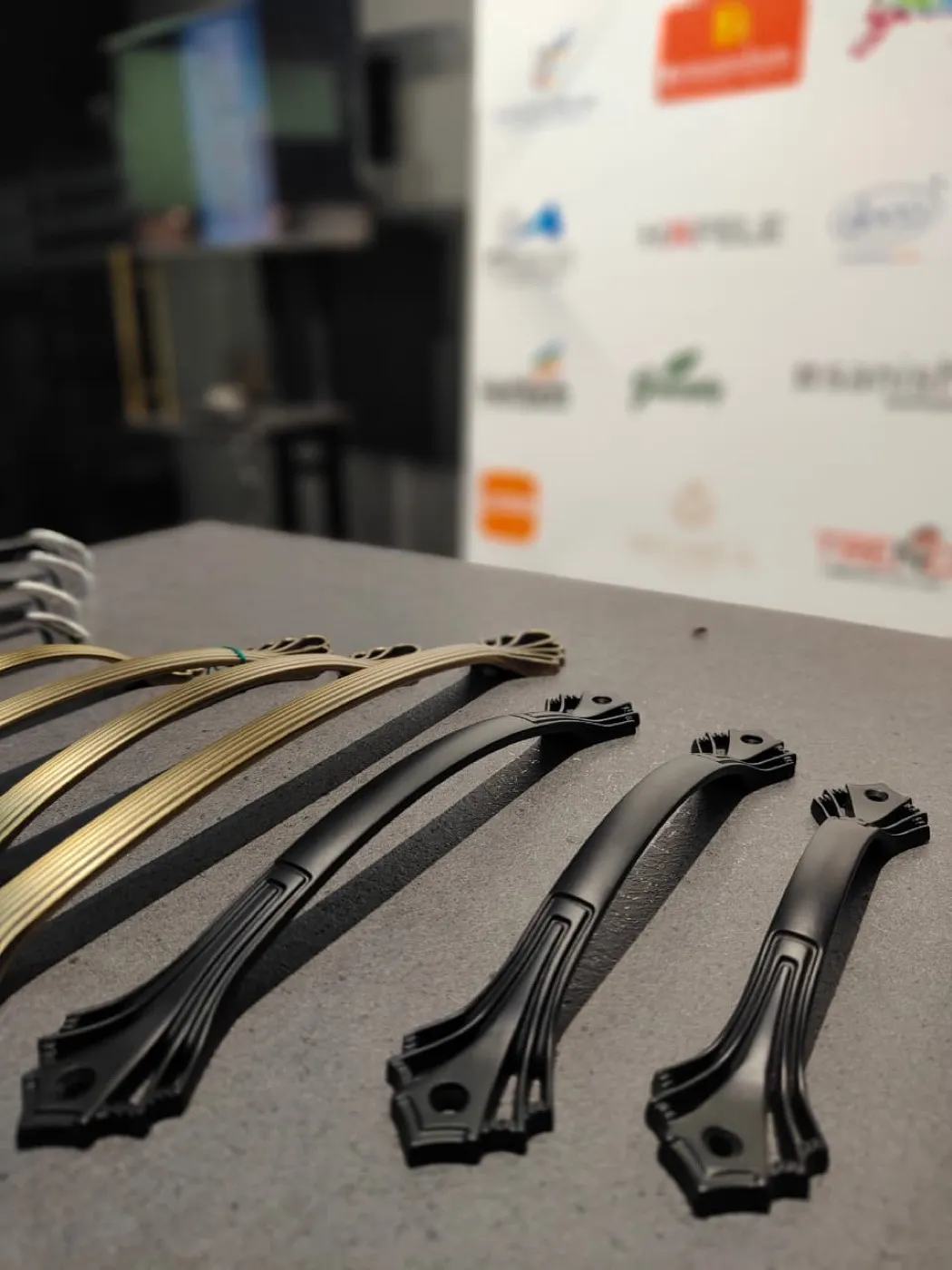
| Matt black | Light wood, white and pastel shutters | Strong contrast, so handle lines stand out |
| Brass and gold tones | Deep greens, blues and walnut tones | Unlacquered brass darkens with handling over time |
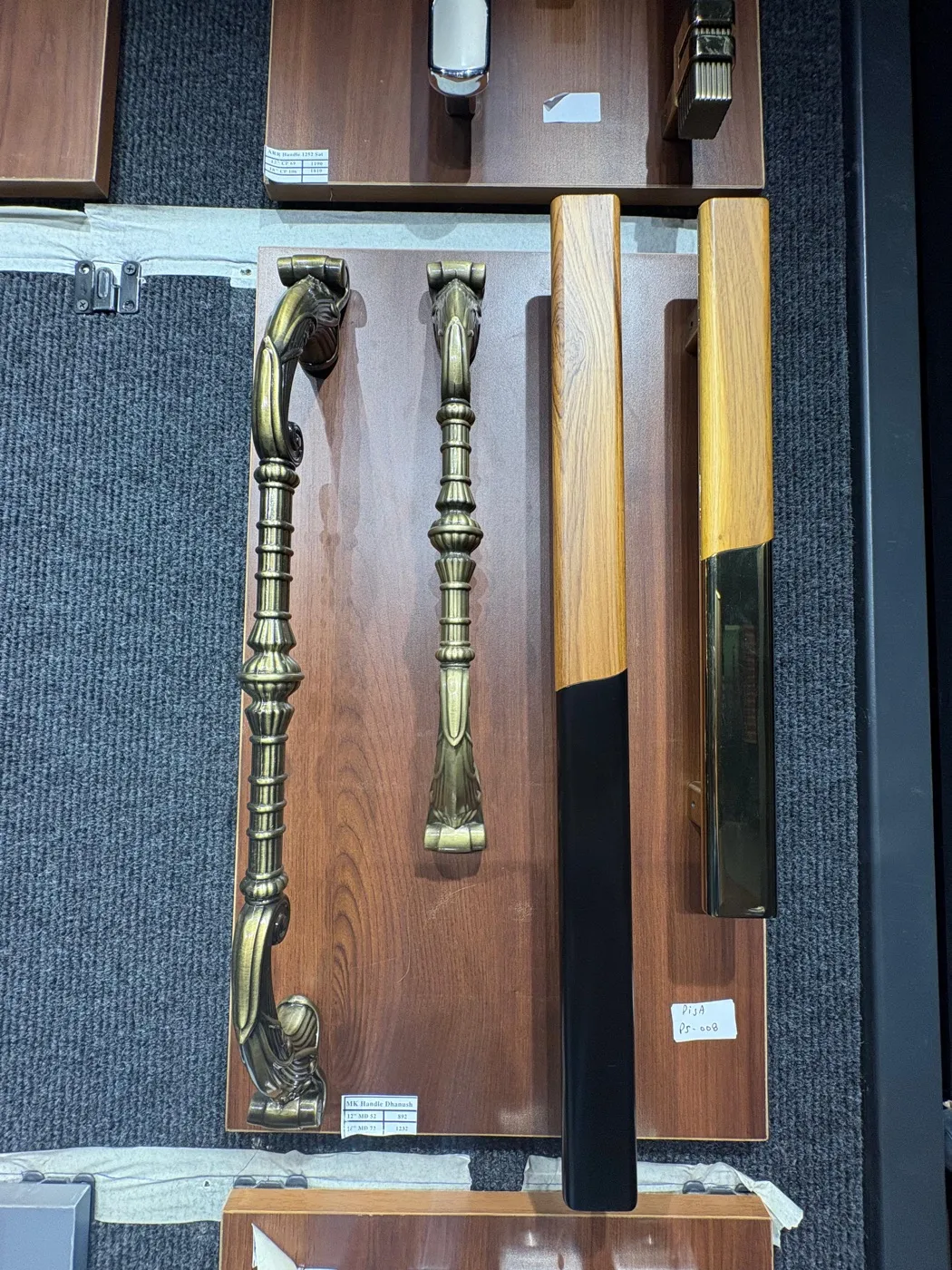
| Antique brass | Traditional and wood-veneer furniture | Often suits bedrooms and pooja units better than modern kitchens |
| Anodised aluminium | Profile and gola systems | Match the colour across every profile in the run |
For more on choosing between the three hardware brands, see our comparison of Hettich vs Häfele vs Ebco, or browse Sri Sri Plywoods' hardware range.
Which handles are easiest for children and elderly family members?
Grip matters more than looks when three generations share a kitchen.
- Choose pulls that fit several fingers on heavy drawers, so nobody has to pinch a small knob.
- Pick rounded ends on handles at a child's head height, such as base-unit doors and low wardrobe drawers.
- Think twice about push-to-open on low drawers in homes with toddlers, as a light push opens them.
- Contrast the handle with the shutter, such as dark on light, to help family members with weaker eyesight.
- Keep handle height consistent across a run of cabinets, so hands find them without looking.
Should kitchen and wardrobe handles be different?
Often, yes. Kitchen cabinet handles face oil, steam, turmeric and wet hands, and the drawers behind them carry heavy loads, so choose strong, easy-to-clean pulls or a profile system. Wardrobe handles face clothes brushing past, so slim edge profiles, G-profiles on full-height shutters, or flush handles on sliding doors reduce snagging. Ebco, for example, lists its Edge Profile Handle for wardrobe and kitchen drawers, in versions for 18 mm and 25 mm board.
Sliding wardrobe doors need special care. The doors pass in front of each other, so any handle that sticks out will hit the other door. Use flush or recessed handles, or a vertical profile along the door edge, on sliding shutters.
The drawers behind the handles matter too: our guide to telescopic vs tandem drawer channels explains which runners suit a heavy kitchen drawer, and our modular kitchen team plans handles, runners and hinges together.
The Sri Sri Plywoods rule: hold the handle before you buy it, on a shutter like yours. A handle is the part of the kitchen you touch most, so choose it for your hand first and the catalogue second.